PRAGYA REFRIGERATION AND ELECTRICALS PRIVATE LIMITED

Industrial Refrigeration

Ceiling Mounted Evaporator
Latest

Ceiling Mounted Evaporator: Working, Applications, Benefits, and Selection Guide

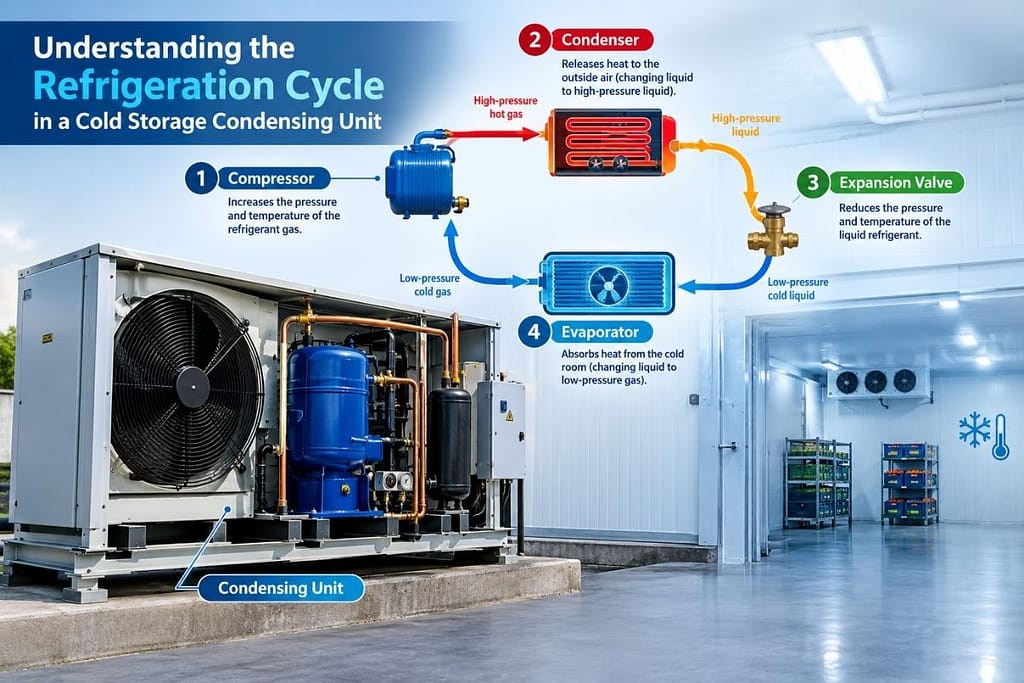
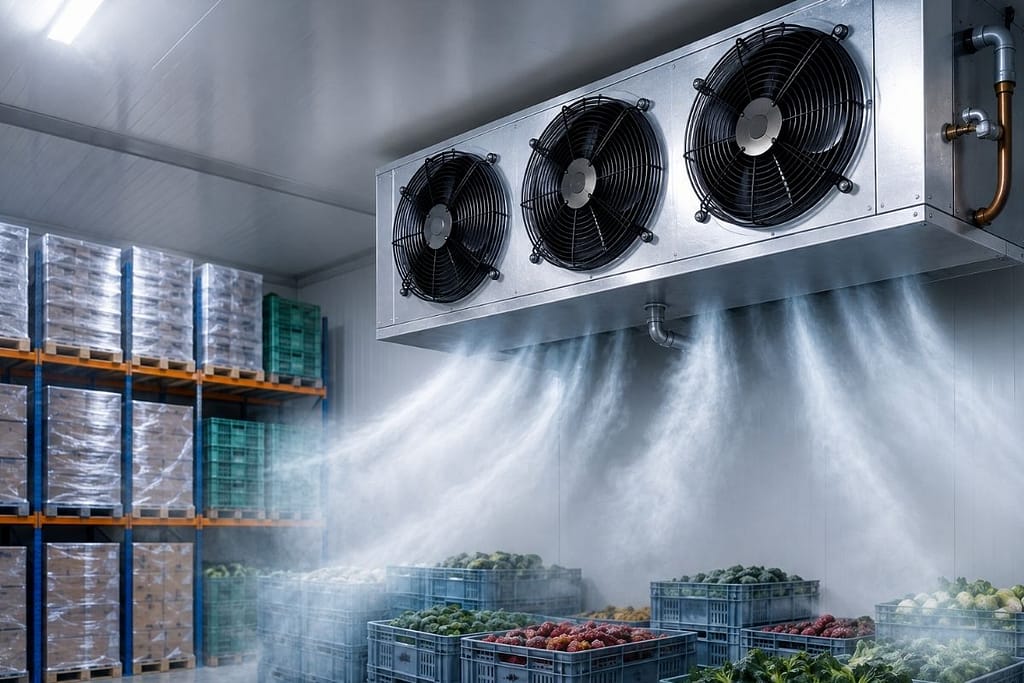
A ceiling mounted evaporator is a refrigeration unit installed inside cold rooms to remove heat and circulate cooled air. It’s used across food, dairy, pharmaceutical, freezer and industrial cold storage applications. Introduction Temperature control is a basic requirement in any cold storage or refrigeration facility. In India, cold rooms show up across food processing, dairy, agriculture, pharmaceuticals, hospitality, logistics and frozen food manufacturing. Fruits, vegetables, dairy items, meat, seafood, ice cream and medicines all need storage conditions kept within a specific range. A ceiling mounted evaporator is one of the components that keeps the temperature where it needs to be. Installed near or on the ceiling, the unit absorbs heat from the cold room and pushes cooled air back through the storage space. The right evaporator can improve temperature uniformity, free up floor space and keep refrigeration performance where it should be. But picking the correct unit takes more than measuring the room. Required temperature, cooling load, product type, humidity, airflow, insulation, door openings, and defrost needs all factor into the decision. Depending on the application, a business might need a standard ceiling mounted unit, an Industrial Evaporator, a Blast Freezer Evaporator, a High Capacity Evaporator or a Low Temperature Evaporator. This guide covers how ceiling mounted evaporators work, where they’re used, what they offer, and what to weigh when choosing a system for a cold storage application in India. 5 Key Points to Know What Is a Ceiling Mounted Evaporator? A ceiling mounted evaporator is an indoor refrigeration unit installed on or near the ceiling of a cold room, freezer room or other temperature-controlled space. Its job is to pull heat out of the room air. Refrigerant runs through the evaporator coil and absorbs that heat, carries it through the rest of the refrigeration system, while fans push cooled air back into the room. Because it’s mounted overhead, the unit doesn’t take up floor space — useful in commercial and industrial cold rooms where the floor is needed for pallets, racks and product movement. Evaporator design changes depending on the temperature range and cooling capacity required. A chilled fruit storage room needs a different setup than a deep freezer or frozen food facility. For larger facilities, this often means an Industrial Evaporator built to handle higher loads and tougher operating conditions. How Does a Ceiling Mounted Evaporator Work? The working principle comes down to the refrigeration cycle. The evaporator’s job is to remove unwanted heat from the cold room. Low-pressure refrigerant enters the coil after passing through an expansion device. At this point, it’s cold enough to pull heat from the surrounding air. Fans draw or push room air across the cold coil. As the warmer air meets the coil surface, heat moves from the air into the refrigerant. The refrigerant absorbs that heat and changes state as part of the cycle. This drops the temperature of the air moving through the evaporator. Fans push the cooled air back through the room. Airflow matters here — poor circulation leaves some parts of the room colder than others. Rack and pallet placement affects this too. Blocking the airflow path can weaken cooling in parts of the room even if the evaporator itself is working fine. After absorbing heat, the refrigerant heads back to the compressor, and the cycle repeats — rejecting the absorbed heat and getting ready to return to the evaporator. Main Components of a Ceiling Mounted Evaporator Design varies by manufacturer and application, but most ceiling mounted evaporators share a few core parts. Evaporator coil: This is the main heat exchanger. Refrigerant flows through it while room air passes over the surface, transferring heat from the air into the refrigerant. Coil surface area and fin arrangement affect both heat transfer and how much frost builds up. Fans move air through the coil and spread cooled air through the room. Required airflow depends on room size, storage layout, product sensitivity and target temperature. Casing: The casing protects the internal parts and needs to hold up in cold, humid conditions while still allowing reasonable access for cleaning and maintenance. Drain pan and drain system: Moisture collects during cooling and defrosting. A drain pan catches the water and routes it to the drainage system — get this wrong, and you end up with standing water and hygiene problems. Defrost system: Frost builds up on the coil in low-temperature and freezer applications. Too much frost cuts airflow and hurts heat transfer, so the system needs a defrost method suited to the application — electric defrost or hot gas defrost, depending on the setup. Types of Ceiling Mounted Evaporators Design varies based on the application and refrigeration requirements. Industrial Evaporator Built for larger refrigeration systems and demanding commercial or industrial use — large cold storage facilities, food processing plants, warehouses, and similar high-load operations. Sizing depends on refrigeration load, operating temperature, room dimensions, airflow requirements and how the rest of the refrigeration system is configured. Industrial jobs also raise questions around control integration, service access and long-term reliability. Blast Freezer Evaporator Used where products need to be cooled or frozen fast. Blast freezing needs high refrigeration capacity paired with airflow designed to pull heat off the product quickly. Common uses: Design here should account for product type, thickness, loading pattern, target temperature and freezing time. Cranking up airflow or capacity without designing the system properly won’t get you the freezing performance you’re after. High Capacity Evaporator Built for applications with heavier cooling loads — large cold rooms, warehouses, food processing facilities and industrial projects where a standard evaporator falls short. Capacity should come from an actual cooling load calculation, factoring in: In larger cold rooms, running multiple evaporators can spread airflow better and give more operational flexibility than one oversized unit. Low Temperature Evaporator Built for freezer rooms and other sub-zero applications, where the equipment needs to hold up at lower temperatures and manage frost buildup. Key considerations: A properly matched low-temperature evaporator helps hold stable conditions and keeps freezer performance consistent.

How Does a High Capacity Evaporator Work in Industrial Refrigeration Systems?
Latest

How Does a High Capacity Evaporator Work in Industrial Refrigeration Systems?

Short version: a high-capacity evaporator pulls heat out of a large industrial space or process and dumps it into the refrigerant, which is how you get efficient cooling at whatever temperature the job needs. Introduction A food processing plant, a pharmaceutical warehouse, a dairy floor — none of these holds a stable temperature by accident. Someone sized the equipment correctly, and a lot of that comes down to the evaporator. Standard commercial refrigeration gear runs out of capacity fast once you’re dealing with a large cold room, a seafood facility or a ripening chamber, so plants like these need something built for the load. That’s the job of a high-capacity evaporator. It’s one of the core heat-transfer parts in an industrial refrigeration system, and its whole purpose is pulling heat out of the space or process it’s attached to. Compare it to what sits inside your home fridge or a small commercial cooler — tiny by comparison. An industrial unit has to handle far more: big air volumes, heavy product loads, doors opening constantly, high humidity, and low temperatures that don’t budge. How well that evaporator performs ends up driving the cooling capacity, how even the temperature stays, how much energy the system burns, and how reliable the whole setup is long-term. What Is a High Capacity Evaporator? A high-capacity evaporator is a refrigeration heat exchanger built to absorb a large quantity of heat from a controlled space, product or industrial process. Refrigerant flows through tubes or specially designed passages inside the evaporator, while air, water, brine or another process medium passes over or around the heat-transfer surface. As the refrigerant absorbs heat, it changes from a low-pressure liquid or liquid-vapour mixture into vapour. “High capacity” refers to the evaporator’s ability to transfer a large amount of heat under specified operating conditions. The actual capacity depends on evaporating temperature, entering air temperature, refrigerant type, airflow, coil surface area, fin spacing, humidity and the temperature difference between the air and refrigerant. Buyers should not select a high-capacity evaporator by physical size alone. It has to match the actual refrigeration load and operating conditions. How Does a High Capacity Evaporator Work? The refrigeration cycle explains the working process. 1. Refrigerant Leaves the Expansion Device After the refrigerant releases heat in the condenser, it reaches the expansion device as a high-pressure liquid. The expansion valve, electronic expansion valve or another metering device controls how much refrigerant enters the evaporator. When the refrigerant passes through this device, its pressure drops. The pressure reduction can flash part of the refrigerant into vapour and drop the refrigerant temperature. The resulting low-pressure, low-temperature refrigerant enters the evaporator. 2. Cold Refrigerant Enters the Evaporator By the time it reaches the evaporator, the refrigerant is colder than the air or process medium around it. That gap is what makes the whole thing work — heat always moves toward cold, never the other way. Picture a cold storage room stacked with product that just came in warm off a truck. All that heat sitting in the room air has to go somewhere, and the evaporator is the surface that lets it move into the refrigerant. 3. Heat Is Transferred to the Refrigerant The evaporator contains tubes, plates or other heat-transfer surfaces built for a large heat exchange area. In an air-cooling application, fans draw warm air from the room across the evaporator coil. Heat from the air passes through the fins and tube walls into the refrigerant. The refrigerant absorbs this heat and starts to boil. This is the evaporator’s central function: it absorbs heat while the refrigerant changes phase from liquid to vapour. Pressure mainly determines the refrigerant’s boiling temperature. The refrigeration system controls the evaporating pressure so the refrigerant stays cold enough to absorb heat from the application. 4. Refrigerant Evaporates Inside the Coil As heat keeps entering the refrigerant, more of the liquid evaporates. A well-designed evaporator puts this phase-change process to work: refrigerant evaporation transfers large amounts of heat without a significant rise in refrigerant temperature during the boiling stage. Near the evaporator outlet, most or all of the liquid refrigerant has evaporated. The system then allows a controlled amount of superheating before the refrigerant returns to the compressor. Correct superheat keeps liquid refrigerant out of the compressor, since liquid entering the compressor can cause serious mechanical problems. 5. Cooled Air Returns to the Industrial Space In forced-air industrial evaporators, fans circulate air over the coil. Warm air enters the evaporator section, gives up heat to the refrigerant and leaves at a lower temperature. This cooled air then spreads through the cold room or industrial area. Continuous air circulation helps keep the temperature uniform. Airflow design still needs care. Airflow that runs too high raises fan energy consumption and can increase product moisture loss; airflow that runs too low creates temperature variations and cuts heat-transfer performance. 6. Refrigerant Vapour Returns to the Compressor After absorbing the required heat, the refrigerant leaves the evaporator as low-pressure vapour and travels through the suction line toward the compressor. The compressor raises the refrigerant’s pressure and temperature. The refrigerant then moves to the condenser, where it releases the absorbed heat to the surrounding environment. The condenser turns the refrigerant back into liquid and sends it toward the expansion device. This cycle repeats for as long as the refrigeration system needs to hold the required temperature. Why Is Evaporator Capacity Important in Industrial Refrigeration? Evaporator capacity matters because an undersized or poorly selected evaporator can’t remove heat fast enough. Industrial cooling loads come from several sources: A blast-freezing application may need rapid heat removal from products. A ripening chamber may need controlled temperature and airflow rather than extremely low temperatures. So evaporator selection has to start with the application, not a generic capacity figure. Major Factors That Affect High Capacity Evaporator Performance Evaporating Temperature Evaporating temperature sets the temperature difference available for heat transfer. A lower evaporating temperature supports lower room temperatures, but unnecessarily low suction temperatures raise compressor power

How Does a Blast Freezer Evaporator Work in Cold Storage Systems
Latest

How Does a Blast Freezer Evaporator Work in Cold Storage Systems?

Quick Answer: A blast freezer evaporator absorbs heat from food by circulating low-temperature refrigerant through finned coils while powerful fans push cold air across the product at high velocity, freezing it rapidly and preserving texture, weight, and quality. Introduction Anyone who has worked in India’s cold chain, whether running a small fish-processing unit in Kochi or managing a large frozen-food plant near Delhi, knows that the evaporator is the real workhorse of a blast freezer. The compressor and condenser get most of the attention because they sit outside and look impressive, but the evaporator is the component actually doing the job of pulling heat out of the product. Get the evaporator design wrong, and even the best compressor in the world will not stop your prawns or parathas from freezing unevenly. This article breaks down exactly how a blast freezer evaporator functions, why it behaves differently from a normal cold room evaporator, and what to check if yours is not performing as it should. It is written for plant engineers, cold storage owners, food processors, and students of refrigeration who want a clear, accurate picture rather than marketing copy. Key Takeaways The Basic Refrigeration Loop Behind Every Evaporator Before looking at the blast freezer specifically, it helps to remember where the evaporator sits in the wider refrigeration cycle. Refrigerant leaves the condenser as a high-pressure liquid, passes through an expansion device such as a thermostatic expansion valve or an electronic expansion valve, and enters the evaporator coil at low pressure and low temperature. Because the pressure has dropped, the refrigerant’s boiling point drops with it, often to somewhere between minus 35°C and minus 45°C in a blast freezer, compared to around minus 8°C to minus 5°C in a typical chiller. At this low temperature, the liquid refrigerant is colder than the air being blown across the coil. Heat naturally moves from warm to cold, so the air gives up its heat to the refrigerant, which boils and turns to vapour inside the tubes. That vapour is then drawn back to the compressor, and the cycle repeats. This is standard refrigeration theory, but what makes a blast freezer evaporator distinct is how aggressively this heat exchange is pushed. What Actually Happens Inside a Blast Freezer Evaporator 1. Refrigerant Distribution Across the Coil The coil itself is built from multiple parallel circuits of copper or aluminium tubing, each fitted with thin aluminium fins to increase surface area. A distributor at the coil inlet splits the incoming refrigerant evenly across these circuits. If distribution is uneven, some circuits starve of refrigerant while others flood, and the result is patchy freezing across the product load, something operators often notice as some trays freezing faster than others in the same batch. 2. Boiling and Heat Absorption As refrigerant travels through the tubes, it absorbs heat and gradually changes from liquid to vapour. This phase change is far more efficient at absorbing heat than simply warming a liquid or a gas would be, which is why refrigeration systems rely on evaporation rather than sensible heat alone. By the time the refrigerant reaches the coil outlet, it should be fully vaporised with a small amount of superheat, typically 4°C to 8°C, confirming that no liquid refrigerant is returning to the compressor, which would otherwise cause serious mechanical damage. 3. High-Velocity Air Movement This is the step that separates a blast freezer from a standard cold room. Large axial fans, usually mounted directly behind or above the evaporator coil, draw warm air from the product and force it through the coil fins at speed. The combination of a very cold coil surface and fast-moving air creates an intense rate of heat transfer, which is why a batch of chicken portions that might take 24 hours to freeze in a still-air cold room can freeze in 3 to 6 hours inside a blast freezer tunnel. Fast freezing matters for a practical reason beyond speed. When food freezes slowly, large ice crystals form inside the cells and rupture their walls, so the product loses moisture and texture on thawing. Rapid freezing produces small, uniform ice crystals that cause far less cellular damage, which is exactly why blast freezing is preferred for high-value products like seafood, meat, and ready-to-eat meals across Indian export units. 4. Frost Formation and Defrost Cycles Because the coil surface runs well below 0°C, moisture in the air condenses and freezes onto the fins almost continuously. This frost layer acts as insulation, reducing airflow and heat transfer the longer it is left unchecked. Most blast freezer evaporators, therefore, run scheduled defrost cycles, commonly electric heater defrost, hot gas defrost, or water defrost, timed by hours of compressor run rather than a fixed clock. In Indian coastal and monsoon regions, where ambient humidity is consistently high, defrost intervals often need to be shorter than the manufacturer’s default setting to keep the coil performing at its rated capacity. 5. Return Air and Repeat Once air has passed through the coil and dropped in temperature, it is directed back over the product, typically through a tunnel or spiral arrangement, and the cycle repeats continuously until the product core reaches the target temperature, usually minus 18°C or lower for long-term frozen storage. Why This Design Matters for Indian Cold Storage Operators India’s cold chain covers a huge range of climates, from the dry heat of Rajasthan to the humid coastline of Andhra Pradesh and Kerala. Ambient conditions directly affect condenser performance and, by extension, how hard the evaporator has to work. A poorly maintained condenser raises head pressure, which reduces the pressure drop available at the expansion valve and can starve the evaporator of refrigerant even when the compressor is running fine. This is a common reason operators report “the blast freezer is not freezing as fast as before” despite no obvious fault with the evaporator coil itself. Regular fin cleaning, correct refrigerant charge, properly calibrated superheat, and a defrost schedule matched to local humidity are the practical levers that

Low Temperature Evaporator
Latest

What Temperature Should a Low-Temperature Evaporator Maintain? 

A low temperature evaporator is what keeps a freezer room actually cold — not just chilly, but cold enough for frozen storage, blast freezing, or pharmaceutical products that can’t warm up even a little. What temperature it needs to hit isn’t fixed; it comes down to what’s being stored and how the rest of the system is set up around it. In practice, most of these run somewhere between -18°C and -40°C. Some go colder if the job calls for it. The range you pick isn’t just a spec sheet number either — it decides how much power the system burns, whether the product stays in good shape, and whether the whole setup holds up without constant troubleshooting. What Is a Low Temperature Evaporator? A low temperature evaporator is a heat exchange device that pulls heat out of a refrigerated space and moves it into the refrigerant. Standard evaporators handle chilled storage; low temperature evaporators are built to keep working under conditions that stay below freezing. These evaporators show up in: A well-built Industrial Evaporator holds temperatures steady while limiting frost buildup and keeping the system running efficiently. Ideal Temperature Range for Low Temperature Evaporators The evaporator’s operating temperature depends mostly on what temperature the room needs to hold. The evaporator itself always runs colder than the room so it can absorb heat effectively. Application Required Room Temperature Typical Evaporator Temperature Frozen food storage -18°C to -25°C -25°C to -35°C Deep freezer rooms -25°C to -35°C -35°C to -45°C Blast freezing -35°C to -40°C -40°C to -50°C Pharmaceutical freezing -20°C to -30°C -30°C to -40°C In most commercial freezing setups, the evaporator runs about 8°C to 12°C below the target room temperature. Why Does a Low Temperature Evaporator Need Lower Temperatures? A refrigeration system pulls heat out of the storage area. For that heat transfer to work, the evaporator coil has to stay colder than the air around it. For example: That gap is what lets the refrigerant inside the coil keep absorbing heat and hold the room at the required temperature. Factors That Affect Low Temperature Evaporator Performance Several things shape how a low temperature evaporator performs and what temperature range it can hit. Get the design right, and airflow spreads evenly through the room instead of leaving cold spots and warm spots fighting each other. Importance of Maintaining the Correct Evaporator Temperature Getting the temperature right matters for a few reasons: Protects Stored ProductsWrong temperatures can spoil food, shorten shelf life, or damage sensitive products. A low-temperature evaporator keeps conditions stable for long-term storage. Improves Energy Efficiency Run the evaporator at the right temperature, and the compressor stops working harder than it needs to, which shows up directly on the electricity bill. Prevents Excessive Frost Build-Up Colder temperatures mean more ice on the coils, plain and simple. Keep the temperature control and defrost cycle dialled in and airflow stays clear instead of getting choked off. Extends Equipment LifeWhen the system runs within its recommended range, compressors, fans, and other parts wear down less and need fewer repairs. Low Temperature Evaporator vs. Room Temperature People often assume the evaporator should match the cold room’s temperature. It doesn’t — the evaporator has to run colder to absorb heat at all. For example: a cold room sitting at -20°C typically needs its evaporator running around -30°C. That 10-degree gap is what’s called the temperature difference, or TD. Getting the TD right balances cooling performance, humidity control, and energy use. How to Choose the Right Low Temperature Evaporator? Picking the right evaporator comes down to a handful of things: Figure out the temperature range you actually need-18°C, -25°C, -35°C, colder — the application decides this, not preference. Size the cooling capacity to the load Undersized and it can’t keep up. Oversized and you’re paying for capacity you don’t use. Match it to what the facility actually needs. Get the fin spacing right Cold applications ice up fast, and tight fin spacing chokes the airflow before long. Wider spacing keeps air moving. Sort out the defrost system Electric, hot gas, water — which one depends on how the unit’s actually running, not a default pick. Common Applications of Low Temperature Evaporators Low temperature evaporators are widely used in industries where precise temperature control is required. Food Processing Industry Used for storing frozen meat, vegetables, dairy products, and seafood at safe temperatures. Pharmaceutical Industry Maintains controlled environments for vaccines, medicines, and biological products. Cold Chain Logistics Supports refrigerated warehouses and transportation facilities where consistent freezing temperatures are essential. Industrial Manufacturing Used in chemical processing and specialized industrial cooling applications. Conclusion A low temperature evaporator typically sits somewhere between -18°C and -40°C, depending on what it’s actually doing. Get that range wrong, and you’re either wasting power or risking the product — so it’s worth taking seriously, not just picking a number off a spec sheet. Cold room, freezer, pharma storage, industrial site — doesn’t matter which. A properly built unit holds its temperature without drama and keeps doing it for years. Pick the right capacity, the right design, set the temperature correctly, and the system runs efficiently without you having to think about it much. Frequently Asked Questions (FAQs) What temperature does a low temperature evaporator maintain? Usually somewhere between -18°C and -40°C. Where exactly depends on what it’s cooling and what the job requires. Can a low temperature evaporator work below -40°C? Yes. Labs and other ultra-low-temperature storage use specially built systems that go colder than that. What is the difference between a normal evaporator and a low temperature evaporator? A normal one is made for chilled storage — nothing near freezing. A low temperature evaporator is a different animal: stronger cooling capacity, wider fin spacing, and a defrost system built to handle the ice that comes with running that cold. Why does the evaporator temperature need to be lower than the cold room temperature? The lower evaporator temperature creates a temperature difference that allows heat to move from the storage area