

A low temperature evaporator is what keeps a freezer room actually cold — not just chilly, but cold enough for frozen storage, blast freezing, or pharmaceutical products that can’t warm up even a little. What temperature it needs to hit isn’t fixed; it comes down to what’s being stored and how the rest of the system is set up around it.
In practice, most of these run somewhere between -18°C and -40°C. Some go colder if the job calls for it. The range you pick isn’t just a spec sheet number either — it decides how much power the system burns, whether the product stays in good shape, and whether the whole setup holds up without constant troubleshooting.
What Is a Low Temperature Evaporator?
A low temperature evaporator is a heat exchange device that pulls heat out of a refrigerated space and moves it into the refrigerant. Standard evaporators handle chilled storage; low temperature evaporators are built to keep working under conditions that stay below freezing.
These evaporators show up in:
- Frozen food storage rooms
- Industrial freezers
- Blast freezing facilities
- Meat and seafood storage units
- Ice-making plants
- Pharmaceutical cold storage
- Chemical storage facilities
A well-built Industrial Evaporator holds temperatures steady while limiting frost buildup and keeping the system running efficiently.
Ideal Temperature Range for Low Temperature Evaporators
The evaporator’s operating temperature depends mostly on what temperature the room needs to hold. The evaporator itself always runs colder than the room so it can absorb heat effectively.
| Application | Required Room Temperature | Typical Evaporator Temperature |
| Frozen food storage | -18°C to -25°C | -25°C to -35°C |
| Deep freezer rooms | -25°C to -35°C | -35°C to -45°C |
| Blast freezing | -35°C to -40°C | -40°C to -50°C |
| Pharmaceutical freezing | -20°C to -30°C | -30°C to -40°C |
In most commercial freezing setups, the evaporator runs about 8°C to 12°C below the target room temperature.
Why Does a Low Temperature Evaporator Need Lower Temperatures?
A refrigeration system pulls heat out of the storage area. For that heat transfer to work, the evaporator coil has to stay colder than the air around it.
For example:
- A cold room that needs -20°C might run its evaporator around -30°C.
- A freezer that needs -35°C might need the evaporator down near -45°C.
That gap is what lets the refrigerant inside the coil keep absorbing heat and hold the room at the required temperature.
Factors That Affect Low Temperature Evaporator Performance
Several things shape how a low temperature evaporator performs and what temperature range it can hit.
- Refrigeration Load The more heat that leaks into the room, the harder the evaporator has to work. Doors left open too often, insulation that’s not doing its job, product piled in past capacity — any of that adds load, and eventually you need a bigger unit to keep up.
- Room Temperature Requirement Not every industry needs the same cold. Frozen food is usually fine around -18°C. Pharma and industrial work often push much lower than that.
- Refrigerant Type The refrigerant itself changes what the evaporator can do — how efficiently it runs, what temperature it can actually hold. Most systems being built now use refrigerants picked for better performance, lower energy draw, and to meet environmental rules.
- Evaporator Design Coil size, fin spacing, how much air it can move, the defrost setup — all of this decides whether the unit actually holds a low temperature or just struggles to.
Get the design right, and airflow spreads evenly through the room instead of leaving cold spots and warm spots fighting each other.
Importance of Maintaining the Correct Evaporator Temperature
Getting the temperature right matters for a few reasons:
Protects Stored Products
Wrong temperatures can spoil food, shorten shelf life, or damage sensitive products. A low-temperature evaporator keeps conditions stable for long-term storage.
Improves Energy Efficiency
Run the evaporator at the right temperature, and the compressor stops working harder than it needs to, which shows up directly on the electricity bill.
Prevents Excessive Frost Build-Up
Colder temperatures mean more ice on the coils, plain and simple. Keep the temperature control and defrost cycle dialled in and airflow stays clear instead of getting choked off.
Extends Equipment Life
When the system runs within its recommended range, compressors, fans, and other parts wear down less and need fewer repairs.
Low Temperature Evaporator vs. Room Temperature
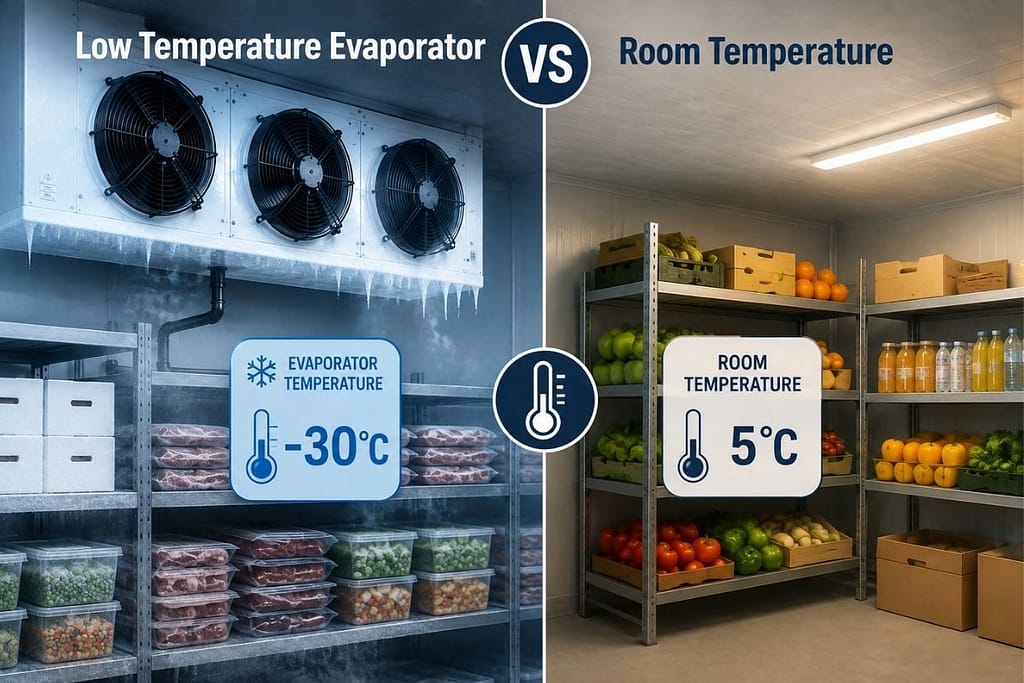
People often assume the evaporator should match the cold room’s temperature. It doesn’t — the evaporator has to run colder to absorb heat at all.
For example: a cold room sitting at -20°C typically needs its evaporator running around -30°C.
That 10-degree gap is what’s called the temperature difference, or TD. Getting the TD right balances cooling performance, humidity control, and energy use.
How to Choose the Right Low Temperature Evaporator?
Picking the right evaporator comes down to a handful of things:
Figure out the temperature range you actually need-18°C, -25°C, -35°C, colder — the application decides this, not preference.
Size the cooling capacity to the load Undersized and it can’t keep up. Oversized and you’re paying for capacity you don’t use. Match it to what the facility actually needs.
Get the fin spacing right Cold applications ice up fast, and tight fin spacing chokes the airflow before long. Wider spacing keeps air moving.
Sort out the defrost system Electric, hot gas, water — which one depends on how the unit’s actually running, not a default pick.
Common Applications of Low Temperature Evaporators
Low temperature evaporators are widely used in industries where precise temperature control is required.
Food Processing Industry
Used for storing frozen meat, vegetables, dairy products, and seafood at safe temperatures.
Pharmaceutical Industry
Maintains controlled environments for vaccines, medicines, and biological products.
Cold Chain Logistics
Supports refrigerated warehouses and transportation facilities where consistent freezing temperatures are essential.
Industrial Manufacturing
Used in chemical processing and specialized industrial cooling applications.
Conclusion
A low temperature evaporator typically sits somewhere between -18°C and -40°C, depending on what it’s actually doing. Get that range wrong, and you’re either wasting power or risking the product — so it’s worth taking seriously, not just picking a number off a spec sheet.
Cold room, freezer, pharma storage, industrial site — doesn’t matter which. A properly built unit holds its temperature without drama and keeps doing it for years. Pick the right capacity, the right design, set the temperature correctly, and the system runs efficiently without you having to think about it much.
Frequently Asked Questions (FAQs)
What temperature does a low temperature evaporator maintain?
Usually somewhere between -18°C and -40°C. Where exactly depends on what it’s cooling and what the job requires.
Can a low temperature evaporator work below -40°C?
Yes. Labs and other ultra-low-temperature storage use specially built systems that go colder than that.
What is the difference between a normal evaporator and a low temperature evaporator?
A normal one is made for chilled storage — nothing near freezing. A low temperature evaporator is a different animal: stronger cooling capacity, wider fin spacing, and a defrost system built to handle the ice that comes with running that cold.
Why does the evaporator temperature need to be lower than the cold room temperature?
The lower evaporator temperature creates a temperature difference that allows heat to move from the storage area into the refrigerant, providing effective cooling.