PRAGYA REFRIGERATION AND ELECTRICALS PRIVATE LIMITED

Industrial Condensing Units

How Does a High Capacity Evaporator Work in Industrial Refrigeration Systems?
Latest

How Does a High Capacity Evaporator Work in Industrial Refrigeration Systems?

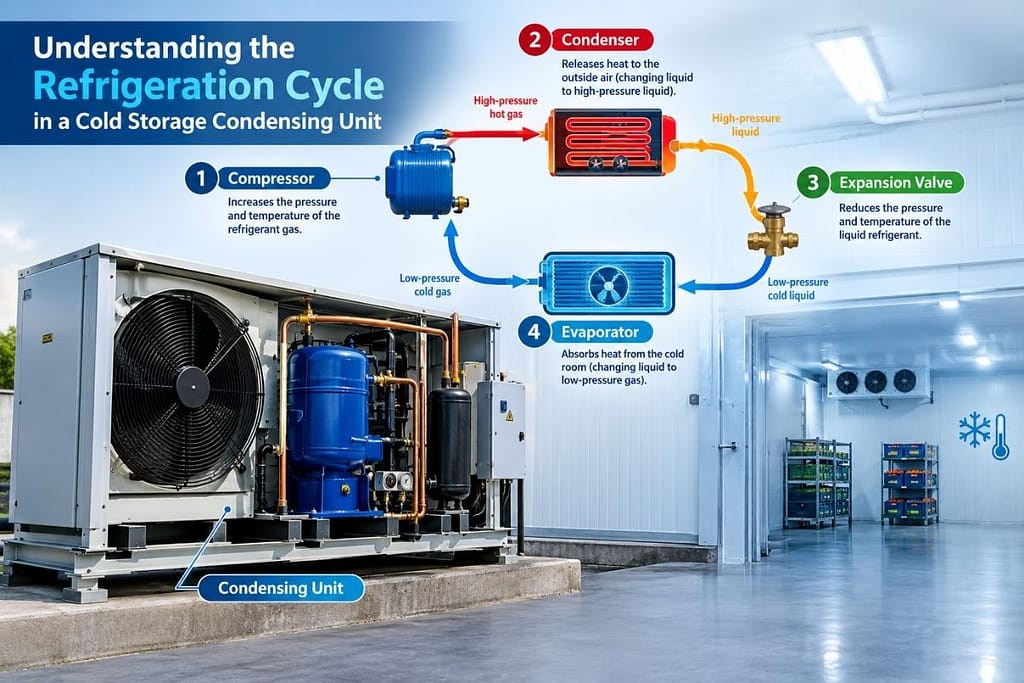
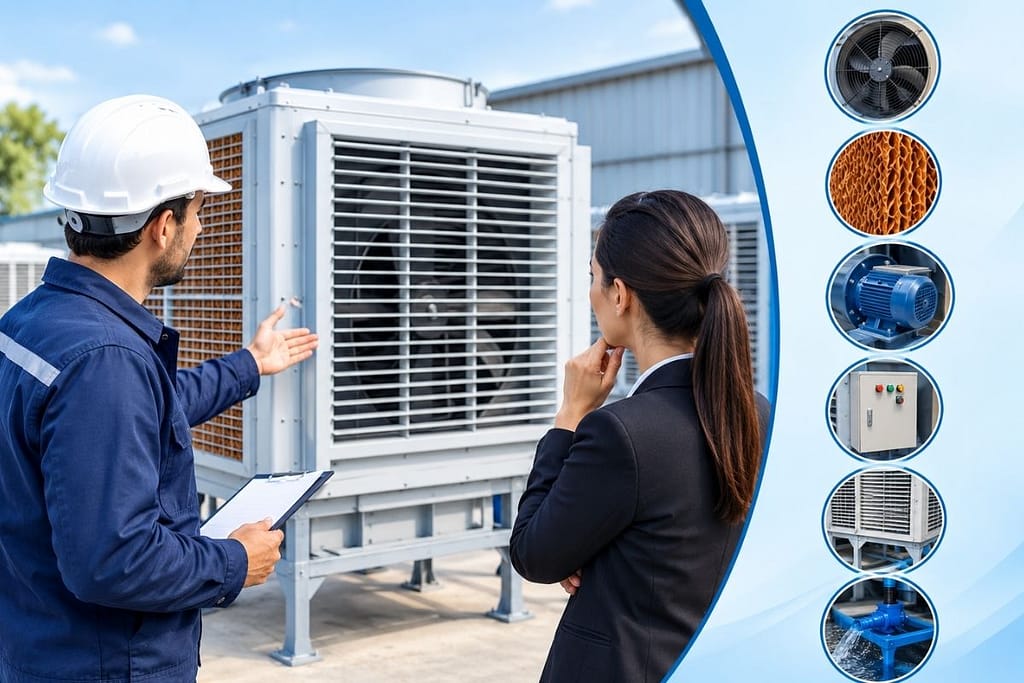
Short version: a high-capacity evaporator pulls heat out of a large industrial space or process and dumps it into the refrigerant, which is how you get efficient cooling at whatever temperature the job needs. Introduction A food processing plant, a pharmaceutical warehouse, a dairy floor — none of these holds a stable temperature by accident. Someone sized the equipment correctly, and a lot of that comes down to the evaporator. Standard commercial refrigeration gear runs out of capacity fast once you’re dealing with a large cold room, a seafood facility or a ripening chamber, so plants like these need something built for the load. That’s the job of a high-capacity evaporator. It’s one of the core heat-transfer parts in an industrial refrigeration system, and its whole purpose is pulling heat out of the space or process it’s attached to. Compare it to what sits inside your home fridge or a small commercial cooler — tiny by comparison. An industrial unit has to handle far more: big air volumes, heavy product loads, doors opening constantly, high humidity, and low temperatures that don’t budge. How well that evaporator performs ends up driving the cooling capacity, how even the temperature stays, how much energy the system burns, and how reliable the whole setup is long-term. What Is a High Capacity Evaporator? A high-capacity evaporator is a refrigeration heat exchanger built to absorb a large quantity of heat from a controlled space, product or industrial process. Refrigerant flows through tubes or specially designed passages inside the evaporator, while air, water, brine or another process medium passes over or around the heat-transfer surface. As the refrigerant absorbs heat, it changes from a low-pressure liquid or liquid-vapour mixture into vapour. “High capacity” refers to the evaporator’s ability to transfer a large amount of heat under specified operating conditions. The actual capacity depends on evaporating temperature, entering air temperature, refrigerant type, airflow, coil surface area, fin spacing, humidity and the temperature difference between the air and refrigerant. Buyers should not select a high-capacity evaporator by physical size alone. It has to match the actual refrigeration load and operating conditions. How Does a High Capacity Evaporator Work? The refrigeration cycle explains the working process. 1. Refrigerant Leaves the Expansion Device After the refrigerant releases heat in the condenser, it reaches the expansion device as a high-pressure liquid. The expansion valve, electronic expansion valve or another metering device controls how much refrigerant enters the evaporator. When the refrigerant passes through this device, its pressure drops. The pressure reduction can flash part of the refrigerant into vapour and drop the refrigerant temperature. The resulting low-pressure, low-temperature refrigerant enters the evaporator. 2. Cold Refrigerant Enters the Evaporator By the time it reaches the evaporator, the refrigerant is colder than the air or process medium around it. That gap is what makes the whole thing work — heat always moves toward cold, never the other way. Picture a cold storage room stacked with product that just came in warm off a truck. All that heat sitting in the room air has to go somewhere, and the evaporator is the surface that lets it move into the refrigerant. 3. Heat Is Transferred to the Refrigerant The evaporator contains tubes, plates or other heat-transfer surfaces built for a large heat exchange area. In an air-cooling application, fans draw warm air from the room across the evaporator coil. Heat from the air passes through the fins and tube walls into the refrigerant. The refrigerant absorbs this heat and starts to boil. This is the evaporator’s central function: it absorbs heat while the refrigerant changes phase from liquid to vapour. Pressure mainly determines the refrigerant’s boiling temperature. The refrigeration system controls the evaporating pressure so the refrigerant stays cold enough to absorb heat from the application. 4. Refrigerant Evaporates Inside the Coil As heat keeps entering the refrigerant, more of the liquid evaporates. A well-designed evaporator puts this phase-change process to work: refrigerant evaporation transfers large amounts of heat without a significant rise in refrigerant temperature during the boiling stage. Near the evaporator outlet, most or all of the liquid refrigerant has evaporated. The system then allows a controlled amount of superheating before the refrigerant returns to the compressor. Correct superheat keeps liquid refrigerant out of the compressor, since liquid entering the compressor can cause serious mechanical problems. 5. Cooled Air Returns to the Industrial Space In forced-air industrial evaporators, fans circulate air over the coil. Warm air enters the evaporator section, gives up heat to the refrigerant and leaves at a lower temperature. This cooled air then spreads through the cold room or industrial area. Continuous air circulation helps keep the temperature uniform. Airflow design still needs care. Airflow that runs too high raises fan energy consumption and can increase product moisture loss; airflow that runs too low creates temperature variations and cuts heat-transfer performance. 6. Refrigerant Vapour Returns to the Compressor After absorbing the required heat, the refrigerant leaves the evaporator as low-pressure vapour and travels through the suction line toward the compressor. The compressor raises the refrigerant’s pressure and temperature. The refrigerant then moves to the condenser, where it releases the absorbed heat to the surrounding environment. The condenser turns the refrigerant back into liquid and sends it toward the expansion device. This cycle repeats for as long as the refrigeration system needs to hold the required temperature. Why Is Evaporator Capacity Important in Industrial Refrigeration? Evaporator capacity matters because an undersized or poorly selected evaporator can’t remove heat fast enough. Industrial cooling loads come from several sources: A blast-freezing application may need rapid heat removal from products. A ripening chamber may need controlled temperature and airflow rather than extremely low temperatures. So evaporator selection has to start with the application, not a generic capacity figure. Major Factors That Affect High Capacity Evaporator Performance Evaporating Temperature Evaporating temperature sets the temperature difference available for heat transfer. A lower evaporating temperature supports lower room temperatures, but unnecessarily low suction temperatures raise compressor power

How Does a Blast Freezer Evaporator Work in Cold Storage Systems
Latest

How Does a Blast Freezer Evaporator Work in Cold Storage Systems?

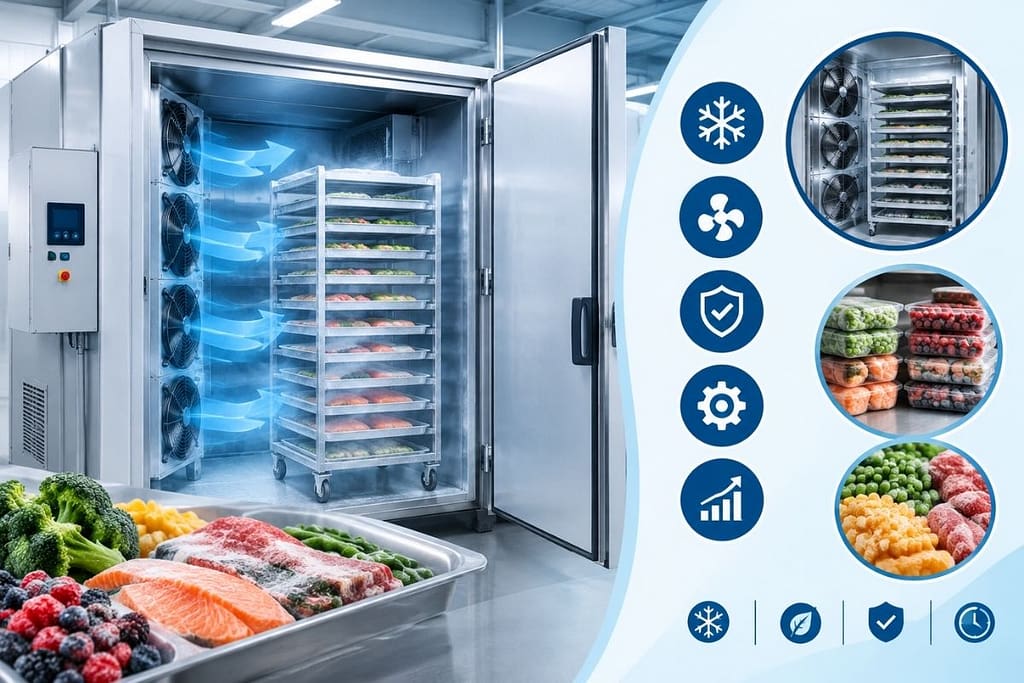
Quick Answer: A blast freezer evaporator absorbs heat from food by circulating low-temperature refrigerant through finned coils while powerful fans push cold air across the product at high velocity, freezing it rapidly and preserving texture, weight, and quality. Introduction Anyone who has worked in India’s cold chain, whether running a small fish-processing unit in Kochi or managing a large frozen-food plant near Delhi, knows that the evaporator is the real workhorse of a blast freezer. The compressor and condenser get most of the attention because they sit outside and look impressive, but the evaporator is the component actually doing the job of pulling heat out of the product. Get the evaporator design wrong, and even the best compressor in the world will not stop your prawns or parathas from freezing unevenly. This article breaks down exactly how a blast freezer evaporator functions, why it behaves differently from a normal cold room evaporator, and what to check if yours is not performing as it should. It is written for plant engineers, cold storage owners, food processors, and students of refrigeration who want a clear, accurate picture rather than marketing copy. Key Takeaways The Basic Refrigeration Loop Behind Every Evaporator Before looking at the blast freezer specifically, it helps to remember where the evaporator sits in the wider refrigeration cycle. Refrigerant leaves the condenser as a high-pressure liquid, passes through an expansion device such as a thermostatic expansion valve or an electronic expansion valve, and enters the evaporator coil at low pressure and low temperature. Because the pressure has dropped, the refrigerant’s boiling point drops with it, often to somewhere between minus 35°C and minus 45°C in a blast freezer, compared to around minus 8°C to minus 5°C in a typical chiller. At this low temperature, the liquid refrigerant is colder than the air being blown across the coil. Heat naturally moves from warm to cold, so the air gives up its heat to the refrigerant, which boils and turns to vapour inside the tubes. That vapour is then drawn back to the compressor, and the cycle repeats. This is standard refrigeration theory, but what makes a blast freezer evaporator distinct is how aggressively this heat exchange is pushed. What Actually Happens Inside a Blast Freezer Evaporator 1. Refrigerant Distribution Across the Coil The coil itself is built from multiple parallel circuits of copper or aluminium tubing, each fitted with thin aluminium fins to increase surface area. A distributor at the coil inlet splits the incoming refrigerant evenly across these circuits. If distribution is uneven, some circuits starve of refrigerant while others flood, and the result is patchy freezing across the product load, something operators often notice as some trays freezing faster than others in the same batch. 2. Boiling and Heat Absorption As refrigerant travels through the tubes, it absorbs heat and gradually changes from liquid to vapour. This phase change is far more efficient at absorbing heat than simply warming a liquid or a gas would be, which is why refrigeration systems rely on evaporation rather than sensible heat alone. By the time the refrigerant reaches the coil outlet, it should be fully vaporised with a small amount of superheat, typically 4°C to 8°C, confirming that no liquid refrigerant is returning to the compressor, which would otherwise cause serious mechanical damage. 3. High-Velocity Air Movement This is the step that separates a blast freezer from a standard cold room. Large axial fans, usually mounted directly behind or above the evaporator coil, draw warm air from the product and force it through the coil fins at speed. The combination of a very cold coil surface and fast-moving air creates an intense rate of heat transfer, which is why a batch of chicken portions that might take 24 hours to freeze in a still-air cold room can freeze in 3 to 6 hours inside a blast freezer tunnel. Fast freezing matters for a practical reason beyond speed. When food freezes slowly, large ice crystals form inside the cells and rupture their walls, so the product loses moisture and texture on thawing. Rapid freezing produces small, uniform ice crystals that cause far less cellular damage, which is exactly why blast freezing is preferred for high-value products like seafood, meat, and ready-to-eat meals across Indian export units. 4. Frost Formation and Defrost Cycles Because the coil surface runs well below 0°C, moisture in the air condenses and freezes onto the fins almost continuously. This frost layer acts as insulation, reducing airflow and heat transfer the longer it is left unchecked. Most blast freezer evaporators, therefore, run scheduled defrost cycles, commonly electric heater defrost, hot gas defrost, or water defrost, timed by hours of compressor run rather than a fixed clock. In Indian coastal and monsoon regions, where ambient humidity is consistently high, defrost intervals often need to be shorter than the manufacturer’s default setting to keep the coil performing at its rated capacity. 5. Return Air and Repeat Once air has passed through the coil and dropped in temperature, it is directed back over the product, typically through a tunnel or spiral arrangement, and the cycle repeats continuously until the product core reaches the target temperature, usually minus 18°C or lower for long-term frozen storage. Why This Design Matters for Indian Cold Storage Operators India’s cold chain covers a huge range of climates, from the dry heat of Rajasthan to the humid coastline of Andhra Pradesh and Kerala. Ambient conditions directly affect condenser performance and, by extension, how hard the evaporator has to work. A poorly maintained condenser raises head pressure, which reduces the pressure drop available at the expansion valve and can starve the evaporator of refrigerant even when the compressor is running fine. This is a common reason operators report “the blast freezer is not freezing as fast as before” despite no obvious fault with the evaporator coil itself. Regular fin cleaning, correct refrigerant charge, properly calibrated superheat, and a defrost schedule matched to local humidity are the practical levers that

Cold Storage Cooling System
Latest

Why Cold Storage Cooling Systems Are Essential for Temperature-Controlled Storage 

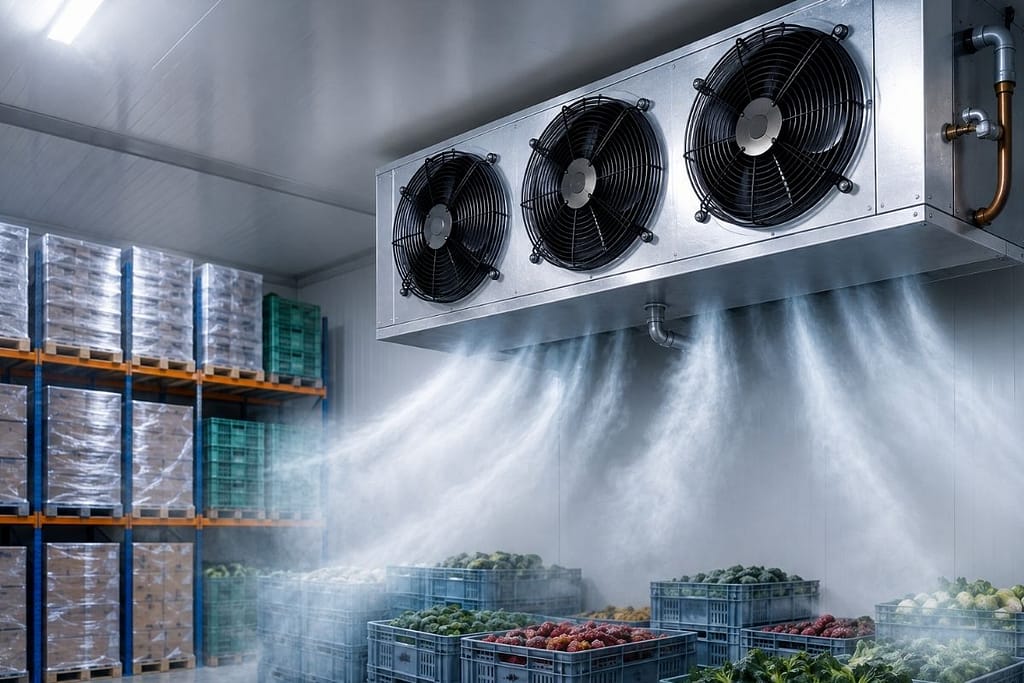
Food processing, pharmaceuticals, dairy, agriculture, logistics, hospitality — all of them run on temperature-controlled storage. Get the temperature wrong, and products lose quality, spoil, or, in some cases, turn unsafe to use. A reliable Cold Storage Cooling System is usually one of the bigger line items a refrigeration-dependent business will spend money on, and for good reason. A well-designed cooling system holds temperatures steady, keeps humidity under control, and does it without running up the electricity bill. Products come through storage and transport still fresh. It doesn’t matter if it’s a small cold room for vegetables or a full industrial warehouse full of frozen meat — the refrigeration setup underneath is what decides whether the operation runs efficiently and whether the product holds up. What Is a Cold Storage Cooling System? A Cold Storage Cooling System is a refrigeration setup built to hold controlled temperatures inside cold rooms, freezer rooms, and refrigerated warehouses. It pulls heat out of the storage space and dumps it outside, so whatever’s inside stays at the temperature it’s supposed to. The main components are: None of them does much alone. It’s the combination that keeps the space stable around the clock. Why Temperature-Controlled Storage Is Essential Products start breaking down the moment they leave their recommended temperature range, sometimes by just a couple of degrees. That’s enough to cut into shelf life, quality, and safety. Cold storage systems help with: For a business managing large inventories, steady cooling is also what keeps customers coming back — one bad batch from a temperature slip can undo a lot of trust. Industries That Depend on Cold Storage Cooling Systems A lot of industries lean on cold storage refrigeration, including: Take reliable refrigeration away from most of these, and the losses add up fast. Key Components That Improve Cooling Performance High-Efficiency Compressors The compressor circulates refrigerant through the system, which is why people call it the heart of the setup. Newer units cool better on less power than older ones. A lot of facilities go with a Commercial Condensing Unit, since it packages the compressor and condenser into one compact unit and holds up well for commercial refrigeration work. Efficient Evaporators Inside the cold room, the Low Temperature Evaporator pulls heat out and keeps cooling even across the space. These are built for freezer rooms and ultra-low temperature jobs, where “close enough” doesn’t cut it. Good airflow off the evaporator gets rid of hot spots, so no corner of the room ends up warmer than the rest. Reliable Condensers Condensers take the heat pulled from inside the cold room and release it outside. Plenty of facilities install an Outdoor Condensing Unit — putting it outdoors improves heat rejection, frees up indoor floor space, and makes servicing it a lot less of a hassle. Benefits of Modern Cold Storage Cooling Systems Supporting Frozen Storage and Rapid Cooling Some products need to go from warm to frozen almost immediately after production, or they lose freshness and texture. That’s the job of Blast Freezers. Blast freezing drops product temperature fast enough to limit ice crystal formation, which is what protects food quality. It shows up in: It also stretches shelf life while keeping the product looking and tasting like it should. Smart Features in Modern Cold Storage Systems Refrigeration systems today come loaded with tech that makes day-to-day operation less of a headache: Between all of it, downtime drops and cooling stays running without someone having to babysit it. Choosing the Right Cold Storage Cooling System Picking the right system isn’t a one-size-fits-all decision. It comes down to: An experienced refrigeration manufacturer can help size the system correctly the first time, instead of leaving that as a problem for later. The Future of Cold Storage Cooling Demand for food preservation, pharmaceutical logistics, and sustainable refrigeration isn’t slowing down, and cold storage technology is moving to keep up. A few trends worth watching: Each one chips away at operating costs and environmental impact in its own way. Conclusion A dependable Cold Storage Cooling System does a lot of unglamorous but necessary work: keeping product quality intact, keeping businesses on the right side of food safety rules, and keeping temperature-controlled storage running the way it’s supposed to. Fresh produce, pharmaceuticals, frozen food production — all of it depends on cooling that doesn’t slip. Get the system right, and it shows up as fewer breakdowns, lower energy bills, and less product thrown out. Cold chain demand isn’t going anywhere, and neither is the need to get the cooling right.

Modern Industrial Condensing Units Benefit
Latest

Energy-Saving Benefits of Modern Industrial Condensing Units

Energy bills are one of the biggest headaches in industrial refrigeration, full stop. Food processors, pharma companies, cold storage operators, manufacturers, logistics firms — they all need cooling that runs nonstop and holds temperature without drifting. Electricity isn’t getting cheaper, and nobody’s under less pressure to go greener, so it makes sense that businesses are looking hard at refrigeration tech that actually cuts the power bill instead of just promising to. That’s where modern Industrial Condensing Units come in. Better compressors, smarter controls, and improved heat transfer design working together — not just marketing language, actual mechanical improvements that show up on the meter. What Are Industrial Condensing Units? Put simply, an industrial condensing unit pulls heat out of refrigerant vapour and turns it back into liquid. It’s a compressor, a condenser, a fan motor, and some control gear, all doing their part. Older units weren’t built with efficiency as the priority. Modern Industrial Condensing Units are, and the difference shows up in the electricity bill. Get the design right and you cut compressor workload, improve airflow, and keep temperatures where they should be. Do those three things and the energy savings basically take care of themselves. How Modern Industrial Condensing Units Save Energy 1. High-Efficiency Compressors Reduce Power Consumption The compressor eats more electricity than anything else in the system, so that’s where the biggest gains live. Newer units get more cooling out of every kilowatt. Variable-speed compressors and better motor designs mean the system only works as hard as it needs to. No more running full blast when demand has dropped off. That one change alone stops a lot of wasted energy. Less cycling, better load management — over a few years, that adds up to real money saved. 2. Improved Heat Transfer Performance Heat exchange doesn’t get talked about enough, honestly. It’s not flashy, but better condenser coils and layouts move heat out faster, and that changes everything downstream. When heat transfer improves, the system can run at lower pressure. Lower pressure means less strain on the compressor, which means smoother running and a smaller bill at the end of the month. Anyone running a Commercial Condensing Unit sees the same benefit from a stronger condenser, especially where commercial refrigeration has to hold steady day in and day out. 3. Smart Controls and Automation Digital controllers have changed the game here. Modern systems track temperature, pressure, and performance in real time instead of guessing. Old systems ran flat out whether they needed to or not. New ones adjust based on what’s actually happening — real demand, real conditions. That’s a genuinely different way of operating, not just a small tweak. Smart monitoring also flags problems before they turn into expensive ones, which saves on both maintenance and the energy that quietly leaks out of a system nobody’s watching closely. 4. Energy-Efficient Fan Motors Fan motors don’t get much attention, but they matter more than people think. Fixed-speed motors run at one setting no matter what — often burning more power than the job calls for. Modern Industrial Condensing Units use energy-efficient fan motors, including electronically commutated motors (EC motors). These draw less power and give much better control over airflow. Since these motors adjust speed to match actual cooling demand, the unit isn’t wasting electricity just to keep the fan spinning. 5. Reduced Maintenance and Longer Equipment Life Better components hold up longer under stress, plain and simple. When a system runs efficiently, its parts wear out slower — less strain means less breakdown. Regularly maintained Industrial Condensing Unit systems keep their performance for years. Dirty coils, tired compressors, damaged parts — all of it drains energy quietly, and most people don’t notice until the bill jumps. Less maintenance, longer equipment life, lower costs. It’s not complicated; it just requires paying attention. Environmental Benefits of Energy-Efficient Condensing Units This isn’t only about the electric bill. Less energy used means fewer emissions tied to generating that power in the first place. A lot of newer units are also built to work with refrigerants that carry a lower global warming potential (GWP). That helps companies hit sustainability targets and stay ahead of regulations that keep getting stricter. Switch to energy-efficient refrigeration and the environmental footprint drops without giving up an ounce of reliability. Applications of Modern Industrial Condensing Units This tech shows up pretty much everywhere cooling matters: Every single one of these needs tight temperature control, and energy-efficient condensing units hold that line while keeping costs down. Choosing the Right Industrial Condensing Unit for Maximum Savings Don’t just grab the first unit that fits the space. Cooling capacity, the operating environment, refrigerant type, compressor efficiency, maintenance needs — all of it factors into getting this right before installation, not after. Size the unit wrong, and you’re either overworking it or leaving capacity on the table. Neither one is cheap. Working with a manufacturer who actually knows what they’re doing helps make sure the system fits the business, not the other way around. Future of Energy-Efficient Refrigeration Technology Where’s this heading? More automation, more sustainability, smarter energy management across the board. IoT monitoring, smart sensors, better compressor controls — the tech keeps getting better, and it’s not slowing down. Cost pressure and environmental responsibility aren’t going anywhere either, so demand for high-performance Industrial Condensing Units is only going to keep climbing. Final Thoughts Modern Industrial Condensing Units cut energy costs through better compressors, smarter controls, improved heat transfer, and tighter overall performance. Lower electricity bills, more reliable refrigeration, real sustainability gains — that’s the payoff. Put the money into an energy-efficient system and it pays you back, both on the monthly bill and in a setup that’s easier to defend from an environmental standpoint. Get the right equipment, keep up with maintenance, and the performance takes care of itself. FAQs 1. What are the main benefits of Industrial Condensing Units? They reduce energy costs, improve cooling efficiency, and provide reliable long-term performance. 2. How do energy-efficient condensing units

Cold Chain Solutions for QSRs
Latest

Cold Chain Solutions for QSRs: Role of CDU, IDU & Blast Freezers

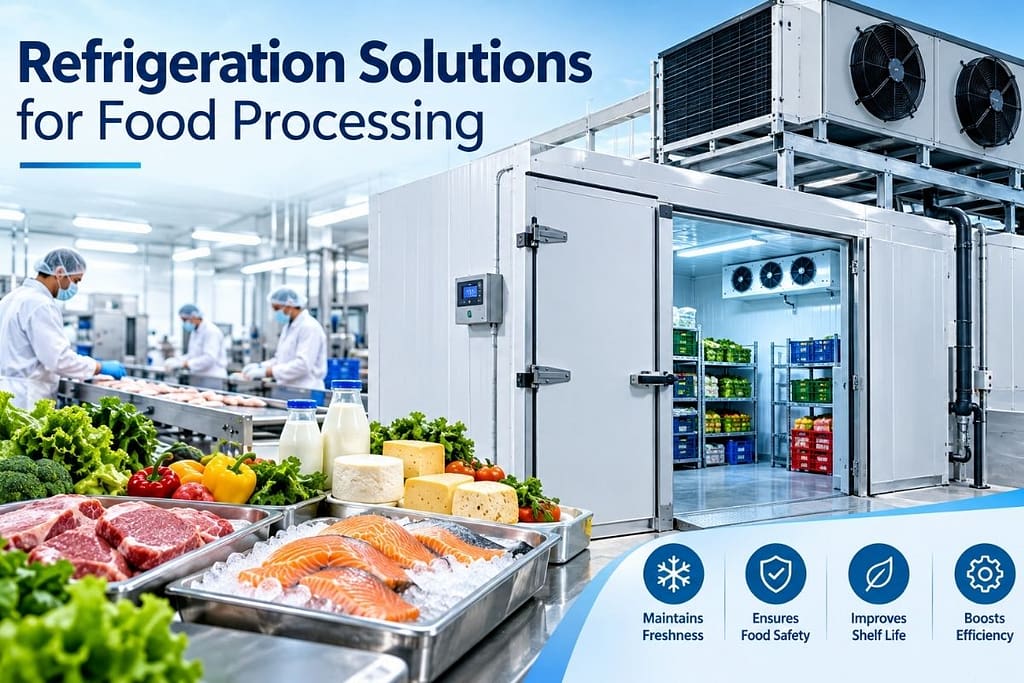
Why Cold Chain is Critical for QSR Success? The Quick Service Restaurant (QSR) industry operates on speed, consistency, and quality. Whether it’s a burger chain, pizza outlet, cloud kitchen, or dessert brand, one factor silently determines success or failure—cold chain efficiency. A broken or inefficient cold chain can lead to: In today’s competitive market, maintaining the right temperature from procurement to serving is not optional—it’s a necessity. This is where Condensing Units (CDU), Indoor Units (IDU), and Blast Freezers play a crucial role in building a reliable cold chain system. Understanding Cold Chain in QSRs A cold chain is a temperature-controlled supply chain that ensures perishable products remain fresh and safe from production to consumption. Typical Cold Chain Flow in QSRs: At each stage, temperature control is critical. Key Challenges Faced by QSRs in Cold Chain Management Before understanding the solution, let’s look at common problems: 1. Temperature Fluctuations Frequent door openings, poor insulation, or improper system design can lead to inconsistent cooling. 2. High Energy Consumption Inefficient systems increase electricity bills significantly. 3. Food Wastage Improper freezing or cooling leads to spoilage and shrinkage. 4. Space Constraints Urban QSR outlets often have limited space for refrigeration systems. 5. Scalability Issues As QSR chains expand, maintaining consistency across outlets becomes challenging. Role of Condensing Units (CDU) in QSR Cold Chain The Condensing Unit (CDU) is the heart of any refrigeration system. It is responsible for removing heat from the refrigerant and maintaining the cooling cycle. Why CDU is Critical for QSRs Applications of CDU in QSRs Key Features QSRs Should Look For Business Impact A well-designed CDU can reduce energy costs by up to 20–30% and improve system lifespan. Role of Indoor Units (IDU) in QSR Cooling Systems The Indoor Unit (IDU), also known as the evaporator, is responsible for distributing cold air inside the refrigerated space. Why IDU Matters Applications in QSRs Types of IDUs Used Key Selection Factors Business Impact Proper IDU selection improves cooling efficiency and reduces product spoilage. Role of Blast Freezers in QSR Operations Blast freezers are designed to rapidly freeze food products at extremely low temperatures, typically between -18°C to -40°C. Why Blast Freezing is Important Applications in QSRs Key Benefits Business Impact Blast freezers enable QSRs to standardize taste across multiple outlets. How CDU, IDU & Blast Freezers Work Together A high-performing cold chain system is not about individual equipment—it’s about integration. System Workflow Integrated Benefits Designing an Efficient Cold Chain for QSRs 1. Load Calculation Understanding cooling requirements based on: 2. Equipment Selection Choosing the right: 3. Layout Planning 4. Automation & Monitoring Energy Efficiency: A Key Concern for QSRs Energy costs are a major operational expense. Ways to Improve Efficiency ROI Impact Energy-efficient systems can significantly reduce monthly electricity bills. Common Mistakes QSRs Make Future Trends in QSR Cold Chain Conclusion: Building a Reliable Cold Chain for Growth Modern QSRs increasingly rely on advanced refrigeration solutions for food processing to maintain food safety, improve operational efficiency, and preserve product quality throughout the cold chain. A strong cold chain ensures: Investing in the right combination of CDU, IDU, and Blast Freezers is not just a technical decision—it’s a strategic business move. Choosing equipment from a trusted modular cold room equipment manufacturer helps QSR businesses build scalable and energy-efficient cold chain infrastructure that supports long-term growth.