
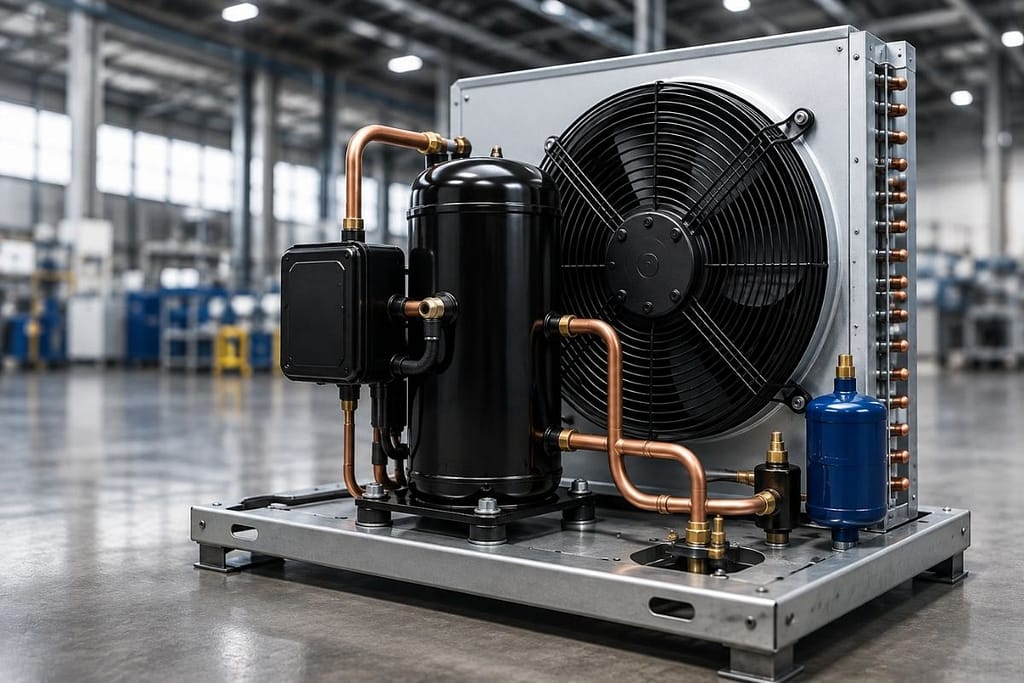
An HVAC system that’s built right will run for years. The right unit means reliable cooling, lower energy bills, and fewer breakdowns down the line.
Not every condensing unit fits every job. Cooling capacity, the environment it will run in, refrigerant compatibility, and how easy it is to maintain all matter before you buy. This guide walks through the factors worth checking so you end up with a system that handles both your current load and whatever comes next.
1. Determine Your Cooling Capacity Requirements
Start with how much cooling your facility actually needs. An oversized or undersized unit wastes money either way — oversized units cycle too often, undersized ones can’t keep up.
Factors that affect this include:
- Room size
- Product storage temperature
- Heat load
- Door opening frequency
- Ambient temperature
- Daily operating hours
Get the sizing right and the unit holds a stable temperature without burning through extra energy.
2. Evaluate Energy Efficiency
Electricity is usually one of the biggest line items in refrigeration operating costs. Scroll compressors tend to run efficiently because they compress continuously rather than through the back-and-forth motion of a reciprocating compressor.
When comparing models, check:
- Coefficient of Performance (COP)
- Power consumption
- Condenser design
- Compressor technology
- Cycling losses
A more efficient model often costs more upfront, but it usually pays that difference back over its service life.
3. Match the Unit to Your Application
Different applications need different things from a condensing unit. Cold storage facilities need steady low temperatures. Food plants have to keep running, no interruptions. Pharmaceutical storage needs precise temperature control. Supermarkets can’t afford to go dark for even a few hours.
A commercial condensing unit usually covers retail stores, restaurants, and supermarkets fine. Bigger industrial jobs need equipment built for heavier, round-the-clock loads.
4. Consider Ambient Operating Conditions
Where you put the unit determines how well the condenser sheds heat. Before buying, check:
Maximum outdoor temperature
- Humidity levels
- Dust exposure
- Airflow availability
- Installation location
An Outdoor Condensing Unit needs to survive weather exposure and still reject heat efficiently when it’s 95 degrees out. Near the coast or in a humid climate, corrosion-resistant coatings aren’t optional.
5. Check Refrigerant Compatibility
Regulations keep phasing out refrigerants with high Global Warming Potential (GWP), so it’s worth checking what a unit is built to run on before you commit.
Common refrigerants include:
- R404A
- R448A
- R449A
- R134a
- R290 (where permitted)
- R32 (HVAC applications)
Pick a unit compatible with newer refrigerants and you skip an upgrade later.
6. Assess Build Quality
Construction quality has a direct effect on how long the equipment lasts.
Look for:
- Heavy-duty cabinet construction
- Powder-coated steel housing
- Corrosion-resistant components
- High-quality condenser coils
- Durable electrical controls
- Weather-resistant enclosure
Spend more on materials now, spend less fixing things later.
7. Noise and Vibration Levels
Noise matters in commercial buildings, hospitals, hotels, and residential installations. Scroll compressors run quieter than reciprocating ones — fewer moving parts, a smoother compression cycle. Less vibration also means less wear on whatever’s connected to the unit.
8. Ease of Maintenance
Regular maintenance keeps a system running efficiently for longer. Before buying, check whether the unit has:
- Easy access panels
- Replaceable filters
- Service-friendly electrical components
- Accessible condenser coils
- Clear maintenance documentation
A unit that’s easy to service costs less to keep running.
9. Availability of Spare Parts and Service Support
Even well-built equipment eventually needs servicing. Look for manufacturers that offer:
- Readily available spare parts
- Technical documentation
- Warranty support
- Local service engineers
- Responsive customer support
Good after-sales support cuts down on downtime when something does go wrong.
10. Future Expansion Plans
If you expect your cooling demand to grow, factor that in now. Planning for expansion can save you from replacing the whole system later. Businesses growing their cold storage or production lines are usually better off with equipment that scales.
Industrial condensing units handle round-the-clock operation and heavier cooling loads without flinching. They’re built to take a beating too, which matters if expansion is on the horizon.
11. Installation Space
Measure the installation area before you pick a unit. Things to check:
- Ventilation clearance
- Service access
- Air circulation
- Pipe routing
- Electrical connections
Restricted airflow cuts into condenser efficiency more than people expect.
12. Total Cost of Ownership
Purchase price is just one number. Look at the whole picture:
- Initial investment
- Energy consumption
- Maintenance costs
- Expected lifespan
- Repair expenses
- Warranty coverage
A higher-quality unit often costs less in the long run — it burns less energy and needs fewer repairs.
Final Thoughts
Buying a scroll compressor condensing unit isn’t just a matter of comparing price tags. You’ve got to weigh cooling capacity, the application it’s going into, environmental conditions, energy efficiency, refrigerant compatibility, and how much maintenance you’re willing to sign up for. Get that right and you end up with a unit that cools reliably, costs less to run, and doesn’t quit on you early.
A well-built unit from a manufacturer with solid support behind it tends to be the better investment over its full lifespan, even if it costs more at the outset.
Frequently Asked Questions
What size scroll compressor condensing unit should I choose?
Depends on your refrigeration load, room size, storage temperature, and operating conditions. Skip the guesswork and get a professional load calculation done.
Are scroll compressor condensing units energy efficient?
Usually. Scroll compressors compress continuously and have fewer moving parts, so they tend to burn less energy than older compressor designs.
How long does a scroll compressor condensing unit last?
With decent installation and regular maintenance, most run 10 to 20 years. Usage and upkeep make the difference.
Can these units go outdoors?
Yes. Plenty are built for it, with weather-resistant construction meant to handle changing conditions.