
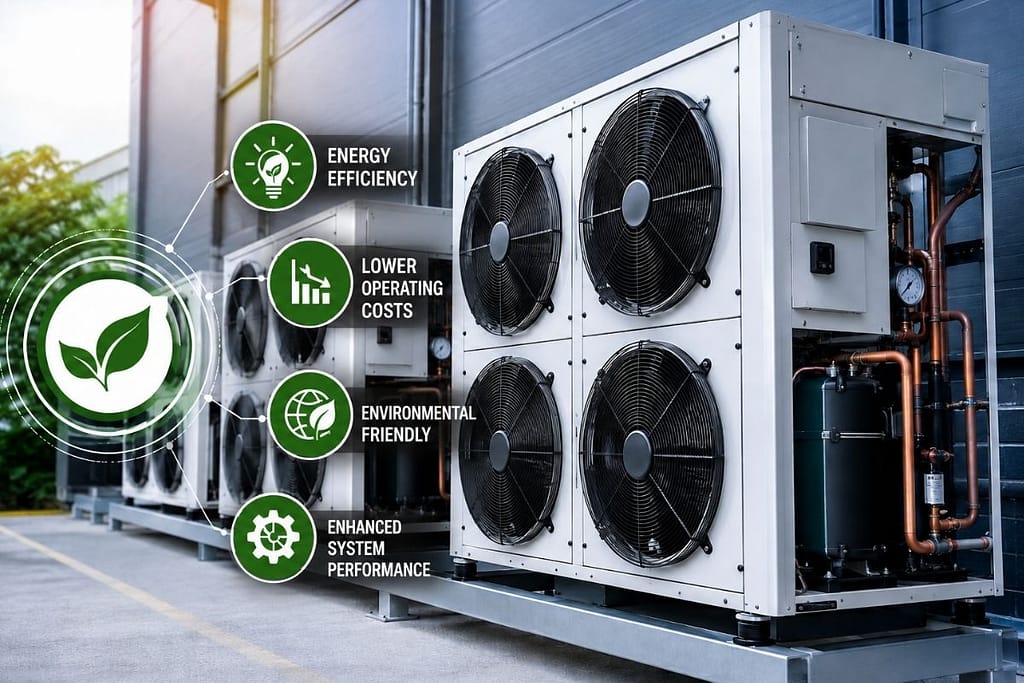
Energy bills are one of the biggest headaches in industrial refrigeration, full stop. Food processors, pharma companies, cold storage operators, manufacturers, logistics firms — they all need cooling that runs nonstop and holds temperature without drifting. Electricity isn’t getting cheaper, and nobody’s under less pressure to go greener, so it makes sense that businesses are looking hard at refrigeration tech that actually cuts the power bill instead of just promising to.
That’s where modern Industrial Condensing Units come in. Better compressors, smarter controls, and improved heat transfer design working together — not just marketing language, actual mechanical improvements that show up on the meter.
What Are Industrial Condensing Units?
Put simply, an industrial condensing unit pulls heat out of refrigerant vapour and turns it back into liquid. It’s a compressor, a condenser, a fan motor, and some control gear, all doing their part.
Older units weren’t built with efficiency as the priority. Modern Industrial Condensing Units are, and the difference shows up in the electricity bill.
Get the design right and you cut compressor workload, improve airflow, and keep temperatures where they should be. Do those three things and the energy savings basically take care of themselves.
How Modern Industrial Condensing Units Save Energy
1. High-Efficiency Compressors Reduce Power Consumption
The compressor eats more electricity than anything else in the system, so that’s where the biggest gains live. Newer units get more cooling out of every kilowatt.
Variable-speed compressors and better motor designs mean the system only works as hard as it needs to. No more running full blast when demand has dropped off. That one change alone stops a lot of wasted energy.
Less cycling, better load management — over a few years, that adds up to real money saved.
2. Improved Heat Transfer Performance
Heat exchange doesn’t get talked about enough, honestly. It’s not flashy, but better condenser coils and layouts move heat out faster, and that changes everything downstream.
When heat transfer improves, the system can run at lower pressure. Lower pressure means less strain on the compressor, which means smoother running and a smaller bill at the end of the month.
Anyone running a Commercial Condensing Unit sees the same benefit from a stronger condenser, especially where commercial refrigeration has to hold steady day in and day out.
3. Smart Controls and Automation
Digital controllers have changed the game here. Modern systems track temperature, pressure, and performance in real time instead of guessing.
Old systems ran flat out whether they needed to or not. New ones adjust based on what’s actually happening — real demand, real conditions. That’s a genuinely different way of operating, not just a small tweak.
Smart monitoring also flags problems before they turn into expensive ones, which saves on both maintenance and the energy that quietly leaks out of a system nobody’s watching closely.
4. Energy-Efficient Fan Motors
Fan motors don’t get much attention, but they matter more than people think. Fixed-speed motors run at one setting no matter what — often burning more power than the job calls for.
Modern Industrial Condensing Units use energy-efficient fan motors, including electronically commutated motors (EC motors). These draw less power and give much better control over airflow.
Since these motors adjust speed to match actual cooling demand, the unit isn’t wasting electricity just to keep the fan spinning.
5. Reduced Maintenance and Longer Equipment Life
Better components hold up longer under stress, plain and simple. When a system runs efficiently, its parts wear out slower — less strain means less breakdown.
Regularly maintained Industrial Condensing Unit systems keep their performance for years. Dirty coils, tired compressors, damaged parts — all of it drains energy quietly, and most people don’t notice until the bill jumps.
Less maintenance, longer equipment life, lower costs. It’s not complicated; it just requires paying attention.
Environmental Benefits of Energy-Efficient Condensing Units
This isn’t only about the electric bill. Less energy used means fewer emissions tied to generating that power in the first place.
A lot of newer units are also built to work with refrigerants that carry a lower global warming potential (GWP). That helps companies hit sustainability targets and stay ahead of regulations that keep getting stricter.
Switch to energy-efficient refrigeration and the environmental footprint drops without giving up an ounce of reliability.
Applications of Modern Industrial Condensing Units
This tech shows up pretty much everywhere cooling matters:
- Cold storage facilities
- Food processing plants
- Pharmaceutical storage
- Supermarkets and commercial refrigeration
- Beverage industries
- Manufacturing units
- Distribution warehouses
Every single one of these needs tight temperature control, and energy-efficient condensing units hold that line while keeping costs down.
Choosing the Right Industrial Condensing Unit for Maximum Savings
Don’t just grab the first unit that fits the space. Cooling capacity, the operating environment, refrigerant type, compressor efficiency, maintenance needs — all of it factors into getting this right before installation, not after.
Size the unit wrong, and you’re either overworking it or leaving capacity on the table. Neither one is cheap.
Working with a manufacturer who actually knows what they’re doing helps make sure the system fits the business, not the other way around.
Future of Energy-Efficient Refrigeration Technology
Where’s this heading? More automation, more sustainability, smarter energy management across the board. IoT monitoring, smart sensors, better compressor controls — the tech keeps getting better, and it’s not slowing down.
Cost pressure and environmental responsibility aren’t going anywhere either, so demand for high-performance Industrial Condensing Units is only going to keep climbing.
Final Thoughts
Modern Industrial Condensing Units cut energy costs through better compressors, smarter controls, improved heat transfer, and tighter overall performance. Lower electricity bills, more reliable refrigeration, real sustainability gains — that’s the payoff.
Put the money into an energy-efficient system and it pays you back, both on the monthly bill and in a setup that’s easier to defend from an environmental standpoint. Get the right equipment, keep up with maintenance, and the performance takes care of itself.
FAQs
1. What are the main benefits of Industrial Condensing Units?
They reduce energy costs, improve cooling efficiency, and provide reliable long-term performance.
2. How do energy-efficient condensing units save electricity?
They save electricity through efficient compressors, smart controls, and improved heat transfer.
3. How long do modern Industrial Condensing Units last?
With proper maintenance, they can provide efficient performance for many years.