Benefits of Copper Condenser Coils in Air Conditioning Systems
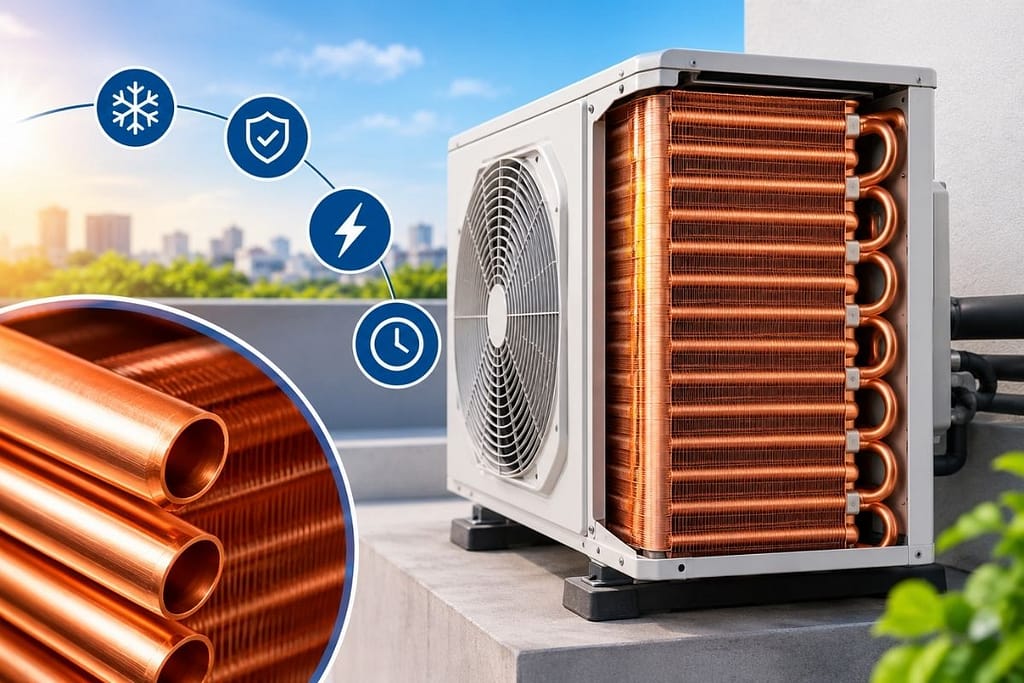
Air conditioning systems have become essential in Indian homes, offices, commercial buildings, hospitals and industrial facilities. With rising summer temperatures across many parts of India, cooling equipment must operate efficiently and reliably, often for extended periods. The performance of an air conditioner depends on several components, including the compressor, condenser, evaporator and expansion device. Among these, the condenser plays a crucial role by releasing the heat absorbed from indoor spaces into the surrounding environment. Copper is widely used in condenser coils because of its high thermal conductivity, durability and suitability for refrigeration applications. When properly designed and maintained, copper condenser coils can support effective heat transfer and dependable system operation. Understanding the benefits of copper condenser coils helps homeowners, HVAC contractors, facility managers and equipment manufacturers make informed decisions. However, the final performance of an air conditioning system also depends on coil construction, fin material, airflow, refrigerant compatibility, installation quality and maintenance. 5 Key Takeaways 1. What Is a Copper Condenser Coil in an Air Conditioner? A copper condenser coil is a heat exchanger component made from copper tubes through which refrigerant circulates. In a typical split air conditioner, the condenser is located in the outdoor unit and releases the heat absorbed from the indoor environment. During the cooling cycle, the compressor sends hot, high-pressure refrigerant vapour to the condenser. As outdoor air passes over the coil, the refrigerant releases heat and condenses into liquid. The liquid refrigerant then travels through the expansion device before entering the evaporator, where it absorbs heat from indoor air. Copper tubes are often combined with aluminium fins to increase the surface area available for heat transfer. The copper tubes carry the refrigerant, while the fins help transfer heat between the tubes and the surrounding air. This arrangement is commonly known as a copper tube aluminium fin heat exchanger. Its overall performance depends on the tube design, fin arrangement, refrigerant flow, airflow and manufacturing quality. 2. Major Benefits of Copper Condenser Coils in Air Conditioning Systems 2.1 Excellent Heat Transfer Capability One of the most important benefits of copper condenser coils is their high thermal conductivity. Copper transfers heat efficiently, making it a useful material for heat exchangers in air conditioning and refrigeration equipment. When hot refrigerant enters the condenser, heat passes through the tube wall and reaches the surrounding air. Copper supports this process, helping the condenser reject heat when the coil is correctly designed and the airflow is adequate. This is particularly important in India, where outdoor temperatures can rise considerably during summer. Poor heat rejection can increase condensing temperature and pressure, potentially reducing cooling performance and increasing the load on the compressor. However, copper alone does not determine an air conditioner’s efficiency. The condenser’s surface area, fan performance, refrigerant charge, coil design and system controls also influence the final result. 2.2 Good Durability and Mechanical Strength Copper tubing is valued for its durability and suitability for refrigeration systems operating under specified pressure and temperature conditions. When the correct tube dimensions, joints and manufacturing methods are used, copper coils can provide dependable service. This makes them useful in residential air conditioners, commercial HVAC equipment and selected industrial refrigeration installations that operate for long periods. Copper can also be formed into different tube configurations, giving manufacturers flexibility when designing heat exchangers for specific cooling requirements. Nevertheless, the service life of a coil depends on more than its material. Vibration, installation quality, refrigerant compatibility, operating pressure, environmental exposure and preventive maintenance can all affect its longevity. 2.3 Good Corrosion Resistance in Suitable Environments Copper offers good corrosion resistance in many conventional air conditioning applications. This can be beneficial in locations where equipment is exposed to humidity and changing weather conditions. In India, outdoor units may operate in coastal cities, humid regions and industrial environments where airborne contaminants can affect heat exchanger surfaces. Copper can perform reliably in many of these settings when the equipment is correctly specified and maintained. However, copper is not completely corrosion-proof. Salt-laden air, aggressive chemicals and certain contaminants can damage components over time. Aluminium fins in copper-tube coils may also corrode, even when the copper tubing remains in relatively good condition. For coastal installations or chemically aggressive environments, buyers should consider protective coatings, environmental ratings and manufacturer recommendations before selecting equipment. 2.4 Easier Inspection and Repair Copper condenser coils offer practical repair advantages in many conventional refrigeration systems. If a small, localised leak develops in an accessible copper tube, a qualified technician may be able to identify the damaged section and carry out an appropriate repair. Depending on the damage, repairing the affected section may be more economical than replacing the complete coil assembly. However, not every coil can be repaired safely or cost-effectively. Extensive corrosion, repeated leaks, structural damage or inaccessible faults may require replacement. Repairs should always be performed by trained professionals using suitable tools and approved procedures. Refrigerant handling, leak testing and pressure testing must follow applicable safety requirements and the equipment manufacturer’s instructions. 2.5 Potential for Lower Long-Term Maintenance Costs The initial purchase price is only one part of the cost of owning an air conditioning system. Electricity consumption, routine servicing, replacement parts and unexpected repairs also influence total expenditure. Copper condenser coils may provide long-term value through their heat transfer properties, durability and established repair methods. When a damaged section can be repaired safely, the cost may be lower than replacing an entire coil. However, copper coils do not automatically have lower maintenance costs in every application. The final expense depends on equipment design, local service availability, spare-part prices, environmental conditions and the nature of the fault. Commercial buildings and industrial facilities should therefore compare the total cost of ownership rather than choosing equipment solely on its initial price. 2.6 Reliable Performance Across Different Applications Copper tubing is used in different types of air conditioning and refrigeration equipment because it can be manufactured in a variety of sizes and configurations. Common applications include: The required coil configuration depends on cooling capacity, refrigerant, operating pressure, available