PRAGYA REFRIGERATION AND ELECTRICALS PRIVATE LIMITED

Blast freezing

How Does a Blast Freezer Evaporator Work in Cold Storage Systems
Latest

How Does a Blast Freezer Evaporator Work in Cold Storage Systems?

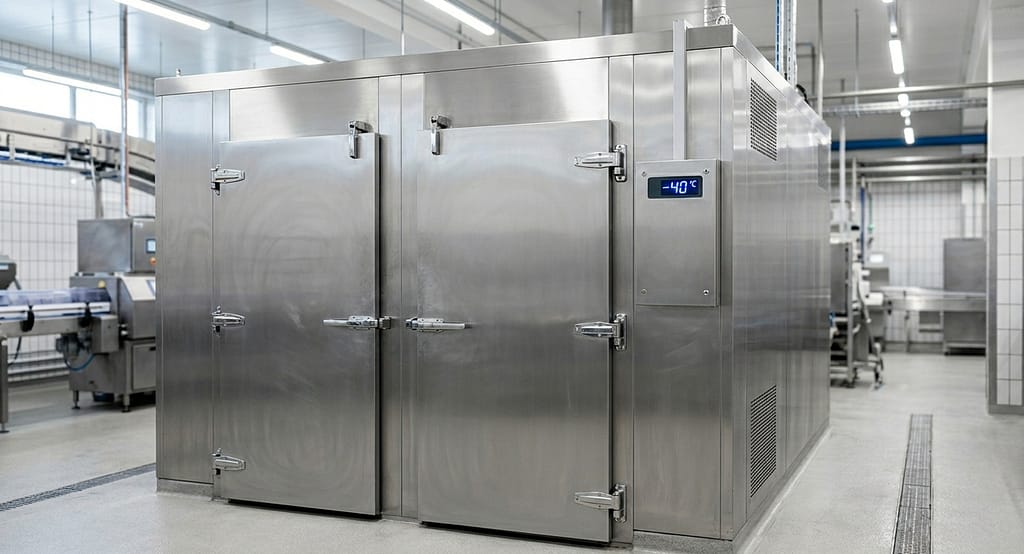
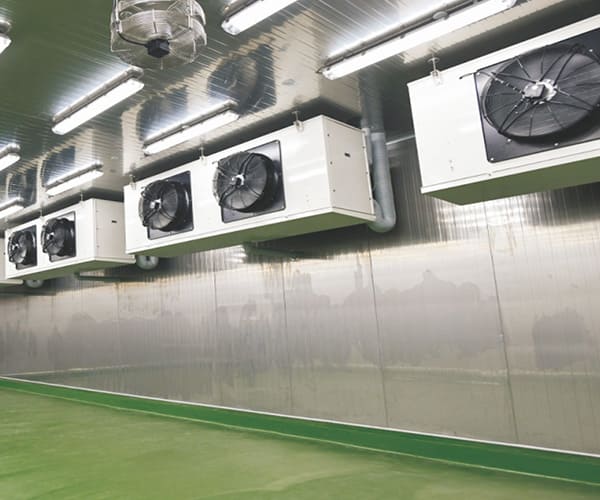
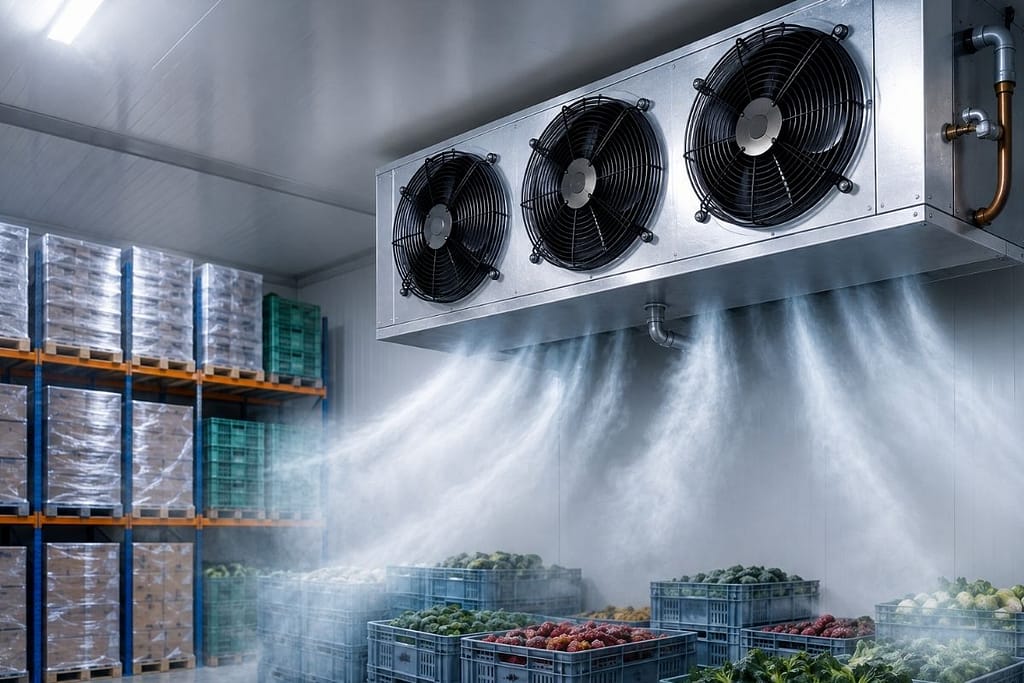
Quick Answer: A blast freezer evaporator absorbs heat from food by circulating low-temperature refrigerant through finned coils while powerful fans push cold air across the product at high velocity, freezing it rapidly and preserving texture, weight, and quality. Introduction Anyone who has worked in India’s cold chain, whether running a small fish-processing unit in Kochi or managing a large frozen-food plant near Delhi, knows that the evaporator is the real workhorse of a blast freezer. The compressor and condenser get most of the attention because they sit outside and look impressive, but the evaporator is the component actually doing the job of pulling heat out of the product. Get the evaporator design wrong, and even the best compressor in the world will not stop your prawns or parathas from freezing unevenly. This article breaks down exactly how a blast freezer evaporator functions, why it behaves differently from a normal cold room evaporator, and what to check if yours is not performing as it should. It is written for plant engineers, cold storage owners, food processors, and students of refrigeration who want a clear, accurate picture rather than marketing copy. Key Takeaways The Basic Refrigeration Loop Behind Every Evaporator Before looking at the blast freezer specifically, it helps to remember where the evaporator sits in the wider refrigeration cycle. Refrigerant leaves the condenser as a high-pressure liquid, passes through an expansion device such as a thermostatic expansion valve or an electronic expansion valve, and enters the evaporator coil at low pressure and low temperature. Because the pressure has dropped, the refrigerant’s boiling point drops with it, often to somewhere between minus 35°C and minus 45°C in a blast freezer, compared to around minus 8°C to minus 5°C in a typical chiller. At this low temperature, the liquid refrigerant is colder than the air being blown across the coil. Heat naturally moves from warm to cold, so the air gives up its heat to the refrigerant, which boils and turns to vapour inside the tubes. That vapour is then drawn back to the compressor, and the cycle repeats. This is standard refrigeration theory, but what makes a blast freezer evaporator distinct is how aggressively this heat exchange is pushed. What Actually Happens Inside a Blast Freezer Evaporator 1. Refrigerant Distribution Across the Coil The coil itself is built from multiple parallel circuits of copper or aluminium tubing, each fitted with thin aluminium fins to increase surface area. A distributor at the coil inlet splits the incoming refrigerant evenly across these circuits. If distribution is uneven, some circuits starve of refrigerant while others flood, and the result is patchy freezing across the product load, something operators often notice as some trays freezing faster than others in the same batch. 2. Boiling and Heat Absorption As refrigerant travels through the tubes, it absorbs heat and gradually changes from liquid to vapour. This phase change is far more efficient at absorbing heat than simply warming a liquid or a gas would be, which is why refrigeration systems rely on evaporation rather than sensible heat alone. By the time the refrigerant reaches the coil outlet, it should be fully vaporised with a small amount of superheat, typically 4°C to 8°C, confirming that no liquid refrigerant is returning to the compressor, which would otherwise cause serious mechanical damage. 3. High-Velocity Air Movement This is the step that separates a blast freezer from a standard cold room. Large axial fans, usually mounted directly behind or above the evaporator coil, draw warm air from the product and force it through the coil fins at speed. The combination of a very cold coil surface and fast-moving air creates an intense rate of heat transfer, which is why a batch of chicken portions that might take 24 hours to freeze in a still-air cold room can freeze in 3 to 6 hours inside a blast freezer tunnel. Fast freezing matters for a practical reason beyond speed. When food freezes slowly, large ice crystals form inside the cells and rupture their walls, so the product loses moisture and texture on thawing. Rapid freezing produces small, uniform ice crystals that cause far less cellular damage, which is exactly why blast freezing is preferred for high-value products like seafood, meat, and ready-to-eat meals across Indian export units. 4. Frost Formation and Defrost Cycles Because the coil surface runs well below 0°C, moisture in the air condenses and freezes onto the fins almost continuously. This frost layer acts as insulation, reducing airflow and heat transfer the longer it is left unchecked. Most blast freezer evaporators, therefore, run scheduled defrost cycles, commonly electric heater defrost, hot gas defrost, or water defrost, timed by hours of compressor run rather than a fixed clock. In Indian coastal and monsoon regions, where ambient humidity is consistently high, defrost intervals often need to be shorter than the manufacturer’s default setting to keep the coil performing at its rated capacity. 5. Return Air and Repeat Once air has passed through the coil and dropped in temperature, it is directed back over the product, typically through a tunnel or spiral arrangement, and the cycle repeats continuously until the product core reaches the target temperature, usually minus 18°C or lower for long-term frozen storage. Why This Design Matters for Indian Cold Storage Operators India’s cold chain covers a huge range of climates, from the dry heat of Rajasthan to the humid coastline of Andhra Pradesh and Kerala. Ambient conditions directly affect condenser performance and, by extension, how hard the evaporator has to work. A poorly maintained condenser raises head pressure, which reduces the pressure drop available at the expansion valve and can starve the evaporator of refrigerant even when the compressor is running fine. This is a common reason operators report “the blast freezer is not freezing as fast as before” despite no obvious fault with the evaporator coil itself. Regular fin cleaning, correct refrigerant charge, properly calibrated superheat, and a defrost schedule matched to local humidity are the practical levers that

Low Temperature Evaporator
Latest

What Temperature Should a Low-Temperature Evaporator Maintain? 

A low temperature evaporator is what keeps a freezer room actually cold — not just chilly, but cold enough for frozen storage, blast freezing, or pharmaceutical products that can’t warm up even a little. What temperature it needs to hit isn’t fixed; it comes down to what’s being stored and how the rest of the system is set up around it. In practice, most of these run somewhere between -18°C and -40°C. Some go colder if the job calls for it. The range you pick isn’t just a spec sheet number either — it decides how much power the system burns, whether the product stays in good shape, and whether the whole setup holds up without constant troubleshooting. What Is a Low Temperature Evaporator? A low temperature evaporator is a heat exchange device that pulls heat out of a refrigerated space and moves it into the refrigerant. Standard evaporators handle chilled storage; low temperature evaporators are built to keep working under conditions that stay below freezing. These evaporators show up in: A well-built Industrial Evaporator holds temperatures steady while limiting frost buildup and keeping the system running efficiently. Ideal Temperature Range for Low Temperature Evaporators The evaporator’s operating temperature depends mostly on what temperature the room needs to hold. The evaporator itself always runs colder than the room so it can absorb heat effectively. Application Required Room Temperature Typical Evaporator Temperature Frozen food storage -18°C to -25°C -25°C to -35°C Deep freezer rooms -25°C to -35°C -35°C to -45°C Blast freezing -35°C to -40°C -40°C to -50°C Pharmaceutical freezing -20°C to -30°C -30°C to -40°C In most commercial freezing setups, the evaporator runs about 8°C to 12°C below the target room temperature. Why Does a Low Temperature Evaporator Need Lower Temperatures? A refrigeration system pulls heat out of the storage area. For that heat transfer to work, the evaporator coil has to stay colder than the air around it. For example: That gap is what lets the refrigerant inside the coil keep absorbing heat and hold the room at the required temperature. Factors That Affect Low Temperature Evaporator Performance Several things shape how a low temperature evaporator performs and what temperature range it can hit. Get the design right, and airflow spreads evenly through the room instead of leaving cold spots and warm spots fighting each other. Importance of Maintaining the Correct Evaporator Temperature Getting the temperature right matters for a few reasons: Protects Stored ProductsWrong temperatures can spoil food, shorten shelf life, or damage sensitive products. A low-temperature evaporator keeps conditions stable for long-term storage. Improves Energy Efficiency Run the evaporator at the right temperature, and the compressor stops working harder than it needs to, which shows up directly on the electricity bill. Prevents Excessive Frost Build-Up Colder temperatures mean more ice on the coils, plain and simple. Keep the temperature control and defrost cycle dialled in and airflow stays clear instead of getting choked off. Extends Equipment LifeWhen the system runs within its recommended range, compressors, fans, and other parts wear down less and need fewer repairs. Low Temperature Evaporator vs. Room Temperature People often assume the evaporator should match the cold room’s temperature. It doesn’t — the evaporator has to run colder to absorb heat at all. For example: a cold room sitting at -20°C typically needs its evaporator running around -30°C. That 10-degree gap is what’s called the temperature difference, or TD. Getting the TD right balances cooling performance, humidity control, and energy use. How to Choose the Right Low Temperature Evaporator? Picking the right evaporator comes down to a handful of things: Figure out the temperature range you actually need-18°C, -25°C, -35°C, colder — the application decides this, not preference. Size the cooling capacity to the load Undersized and it can’t keep up. Oversized and you’re paying for capacity you don’t use. Match it to what the facility actually needs. Get the fin spacing right Cold applications ice up fast, and tight fin spacing chokes the airflow before long. Wider spacing keeps air moving. Sort out the defrost system Electric, hot gas, water — which one depends on how the unit’s actually running, not a default pick. Common Applications of Low Temperature Evaporators Low temperature evaporators are widely used in industries where precise temperature control is required. Food Processing Industry Used for storing frozen meat, vegetables, dairy products, and seafood at safe temperatures. Pharmaceutical Industry Maintains controlled environments for vaccines, medicines, and biological products. Cold Chain Logistics Supports refrigerated warehouses and transportation facilities where consistent freezing temperatures are essential. Industrial Manufacturing Used in chemical processing and specialized industrial cooling applications. Conclusion A low temperature evaporator typically sits somewhere between -18°C and -40°C, depending on what it’s actually doing. Get that range wrong, and you’re either wasting power or risking the product — so it’s worth taking seriously, not just picking a number off a spec sheet. Cold room, freezer, pharma storage, industrial site — doesn’t matter which. A properly built unit holds its temperature without drama and keeps doing it for years. Pick the right capacity, the right design, set the temperature correctly, and the system runs efficiently without you having to think about it much. Frequently Asked Questions (FAQs) What temperature does a low temperature evaporator maintain? Usually somewhere between -18°C and -40°C. Where exactly depends on what it’s cooling and what the job requires. Can a low temperature evaporator work below -40°C? Yes. Labs and other ultra-low-temperature storage use specially built systems that go colder than that. What is the difference between a normal evaporator and a low temperature evaporator? A normal one is made for chilled storage — nothing near freezing. A low temperature evaporator is a different animal: stronger cooling capacity, wider fin spacing, and a defrost system built to handle the ice that comes with running that cold. Why does the evaporator temperature need to be lower than the cold room temperature? The lower evaporator temperature creates a temperature difference that allows heat to move from the storage area

Energy Efficiency blast-freezer-10
Latest

Energy Efficiency in Blast Freezers: How We Help You Reduce Operating Costs

In industries like food processing, dairy, seafood, meat, and Quick Service Restaurants (QSRs), blast freezers are essential for preserving product quality and extending shelf life. But one concern we consistently hear from our customers is this: “Why is my electricity bill so high?” The answer often lies in energy efficiency. A blast freezer is a high-load machine, and if it is not designed or selected properly, it can significantly increase your operating costs. From our experience at Pragya Refrigeration, improving energy efficiency is not just about reducing power consumption—it’s about optimizing the entire system. In this blog, we’ll walk you through how energy efficiency impacts your costs and how we ensure our systems help you save in the long run. Why Energy Efficiency Matters in Blast Freezers A blast freezer typically operates continuously and handles heavy cooling loads. Even small inefficiencies can result in large energy losses over time. What inefficient systems lead to: On the other hand, an energy-efficient system ensures: 1. Proper System Design is the Foundation From our experience, the biggest mistake businesses make is ignoring system design. We always start with: If a blast freezer is oversized, it wastes energy. If it’s undersized, it overworks the system—again increasing power consumption. At Pragya Refrigeration, we design every system based on actual requirements, ensuring optimal performance without energy wastage. 2. High-Efficiency Components Make a Big Difference Energy efficiency depends heavily on the quality of components used. We focus on: Our Enzo branded IDUs & CDUs are engineered to deliver maximum cooling with minimum energy consumption. Because we manufacture them in-house, we ensure that every component works in perfect coordination, reducing energy losses. 3. Airflow Design: The Hidden Energy Factor Airflow is one of the most underestimated contributors to energy consumption. Poor airflow leads to: We design our blast freezers with: This ensures faster freezing cycles, which directly reduces power consumption. 4. Faster Freezing = Lower Energy Consumption It may sound counterintuitive, but faster freezing actually saves energy. Why? When freezing takes longer: Our approach focuses on rapid temperature pull-down, which: 5. Insulation Quality Plays a Critical Role One of the major reasons for energy loss is poor insulation. We ensure: Good insulation keeps the cold air inside and reduces the load on the system, resulting in significant energy savings. 6. Integrated System Approach (CDU + IDU + Blast Freezer) Energy efficiency is not just about the blast freezer—it’s about the complete system. We always design systems where: Because our Enzo branded IDUs & CDUs are developed with complete in-house engineering and R&D, we ensure seamless integration. Why this matters: 7. Smart Controls & Monitoring Modern blast freezers should not operate blindly. We recommend: These systems help: 8. Maintenance: The Most Ignored Cost Factor Even the most efficient system can become inefficient without proper maintenance. From our experience, common issues include: We always advise regular maintenance to: 9. Why In-House Manufacturing Matters for Energy Efficiency One of the biggest advantages we offer at Pragya Refrigeration is complete in-house manufacturing. From: Everything is done under one roof. Why this impacts energy efficiency: When all components are designed and built together, the system runs more efficiently compared to assembled or outsourced setups. 10. Cost vs Long-Term Savings We always tell our customers: Don’t just look at the initial price—look at the lifetime cost. An energy-efficient blast freezer may have a slightly higher upfront cost, but it offers: Over time, the savings far outweigh the initial investment. Common Mistakes That Increase Energy Costs We’ve seen many businesses unknowingly increase their costs by: Avoiding these mistakes can significantly reduce operating expenses. Conclusion Energy efficiency in blast freezers is not a luxury—it’s a necessity for any business that wants to control costs and improve profitability. From our experience at Pragya Refrigeration, achieving energy efficiency requires the right combination of: With our in-house engineering, dedicated R&D, and end-to-end manufacturing, along with Enzo branded IDU & CDU systems, we ensure that every blast freezer we deliver is optimized for performance, reliability, and energy savings. What this means for you

Blast Freezer
Latest

Key Factors to Consider Before Buying a Blast Freezer

When we work with industries like food processing, dairy, seafood, meat, bakery, and Quick Service Restaurants (QSRs), one challenge comes up again and again—maintaining product quality while extending shelf life. A blast freezer is one of the most powerful solutions to achieve this. But from our experience, buying a blast freezer is not just about selecting a machine—it’s about making a long-term investment that affects your product quality, operational efficiency, and energy costs. We’ve seen many businesses choose equipment based only on price, and later struggle with performance issues, higher energy bills, and product losses. That’s exactly why we always guide our customers to evaluate the right factors before making a decision. 1. Cooling Capacity & Load Requirement The first thing we always analyze is your actual cooling requirement. If the blast freezer is undersized, it won’t achieve the desired temperature efficiently. If it’s oversized, you’ll end up paying unnecessary energy costs. What we consider We strongly recommend proper load calculation before finalizing any system. This ensures optimal performance and long-term efficiency. 2. Type of Product to be Frozen Every product behaves differently during freezing. For example: We always design solutions based on the specific product because using a generic system can compromise quality after thawing. 3. Freezing Time & Performance The core purpose of a blast freezer is speed. From our experience, faster freezing: We always focus on real performance, not just technical specifications on paper. 4. Airflow Design & Distribution This is one of the most critical yet overlooked factors. A well-designed airflow system ensures: At our end, we pay special attention to airflow engineering because it directly impacts product quality. 5. Energy Efficiency Energy cost is a major concern for every business. We always recommend looking at: A slightly higher initial investment in an energy-efficient system can save significant operational costs over time. 6. Build Quality & Insulation A blast freezer operates continuously in demanding conditions. That’s why build quality matters. We ensure: Good insulation not only improves performance but also reduces energy consumption. 7. Temperature Control & Monitoring Precise temperature control is essential for consistency and food safety. We recommend systems that offer: This helps maintain product quality across every batch. 8. Space & Layout Planning We understand that space is often limited, especially in urban facilities. That’s why we always evaluate: We also provide compact and customized designs to fit your operational needs. 9. Maintenance & Service Support Even the best systems require proper maintenance. We always design our systems to be: This ensures minimal downtime and long-term reliability. 10. Integration with Complete Refrigeration System A blast freezer is just one part of the entire refrigeration setup. It must work seamlessly with: We always focus on complete system integration to ensure smooth and efficient operation. Why Manufacturing Quality Matters (Our Approach) One important factor that we believe many buyers overlook is how the machine is actually manufactured. At Pragya Refrigeration, we focus on complete control over quality and engineering. Our Enzo branded IDUs & CDUs are developed with: Why this matters for you Because everything is built in-house, we ensure: What we ensure in every machine For us, it’s not just about delivering a machine—it’s about delivering a reliable solution. Cost vs Long-Term Value We always advise our customers not to focus only on the initial price. Instead, we evaluate: In most cases, a low-cost machine ends up being more expensive in the long run. Common Mistakes We See Buyers Make Over the years, we’ve seen some common mistakes: Avoiding these mistakes can save significant cost and operational challenges. Conclusion Buying a blast freezer is a critical decision that directly impacts your product quality, efficiency, and profitability. From our experience, the right system is not just about specifications—it’s about proper design, engineering, and long-term reliability. At Pragya Refrigeration, we focus on every detail—from load calculation to airflow design and from manufacturing to final testing. With our in-house engineering approach and Enzo IDU & CDU systems, we ensure that every machine we deliver meets high standards of performance and durability. Why this matters for your business

blast-freezing
Latest

How Blast Freezing Increases Shelf Life of Perishable Products?

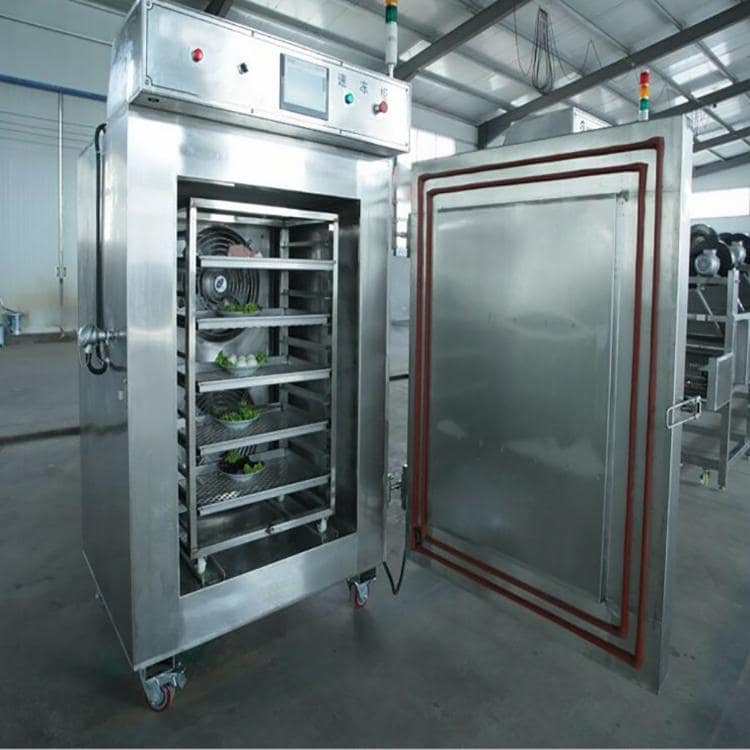
In industries dealing with perishable products—such as food processing, dairy, seafood, meat, and quick service restaurants (QSRs)—maintaining freshness is one of the biggest challenges. Products can spoil quickly due to microbial growth, temperature fluctuations, and improper storage conditions. Traditional freezing methods often fail to preserve the original texture, taste, and nutritional value of products. This is where blast freezing becomes a game-changing solution. Blast freezing is not just about freezing faster—it’s about preserving quality, extending shelf life, and reducing wastage. For businesses, it directly impacts profitability and operational efficiency. What is Blast Freezing? Blast freezing is a rapid freezing process where products are exposed to extremely low temperatures, typically ranging from -18°C to -40°C, using high-velocity cold air. Unlike conventional freezing, which slowly reduces temperature, blast freezing works quickly to bring the core temperature of the product down in a short time. How It Works This rapid process is the key to preserving product integrity. Why Shelf Life Matters for Perishable Products Short shelf life leads to: Extending shelf life allows businesses to: The Science Behind Blast Freezing To understand how blast freezing increases shelf life, it’s important to look at what happens during freezing. 1. Ice Crystal Formation In slow freezing: In blast freezing: 2. Reduction in Microbial Activity Microorganisms require favorable temperatures to grow. Blast freezing: 3. Enzyme Activity Control Enzymes can cause spoilage even at low temperatures. Blast freezing slows enzyme reactions, helping maintain: Key Ways Blast Freezing Increases Shelf Life 1. Rapid Temperature Reduction The faster a product is frozen, the less time it spends in the “danger zone” (where bacteria grow rapidly). This significantly increases shelf life. 2. Preservation of Product Structure By maintaining cell integrity, blast freezing ensures that products: This is especially important for meat, fruits, and bakery items. 3. Minimizing Moisture Loss Slow freezing leads to dehydration and freezer burn. Blast freezing: 4. Prevention of Bacterial Growth Rapid freezing slows down microbial activity, reducing the risk of contamination and spoilage. 5. Extended Storage Capability Products frozen using blast freezing can be stored for: Industries That Benefit from Blast Freezing 1. Food Processing Industry Used for freezing ready-to-eat meals, vegetables, and packaged foods. 2. Meat & Poultry Modern meat processing refrigeration equipment combined with blast freezers helps maintain texture, color, freshness, and food safety while extending product shelf life. 3. Seafood Industry Prevents spoilage and maintains taste during transportation. 4. Dairy Industry Used for products like ice cream and frozen desserts. 5. QSR & Cloud Kitchens Enables bulk preparation and standardized quality across outlets. 6. Pharmaceutical Industry Blast freezing and pharmaceutical cold rooms use advanced pharmaceutical cold storage equipment to maintain precise temperatures for vaccines, medicines, and other temperature-sensitive healthcare products while ensuring product safety and regulatory compliance. 7. Beverage Industry Beverage manufacturers rely on beverage storage cooling systems to maintain optimal temperatures for juices, dairy beverages, soft drinks, and other temperature-sensitive products during storage and distribution. Business Benefits of Blast Freezing 1. Reduced Food Wastage Less spoilage means higher profitability. 2. Better Inventory Management Businesses can store products longer and plan supply efficiently. 3. Improved Product Quality Maintains taste, texture, and appearance. 4. Cost Savings Lower losses and optimized logistics reduce overall costs. 5. Scalability Supports centralized production and multi-location distribution. Blast Freezing vs Conventional Freezing Factor Blast Freezing Conventional Freezing Freezing Speed Very Fast Slow Ice Crystal Size Small Large Product Quality High Moderate Shelf Life Longer Shorter Moisture Retention Excellent Poor Common Mistakes to Avoid Even with blast freezers, improper usage can reduce effectiveness: Following best practices ensures optimal performance. Tips for Maximizing Shelf Life Future of Blast Freezing With growing demand for frozen and ready-to-eat food, blast freezing technology is evolving: Businesses investing in modern solutions gain a competitive advantage. Conclusion Blast freezing is a powerful solution for extending the shelf life of perishable products. By rapidly reducing temperature, preserving structure, and minimizing microbial activity, it ensures that products remain fresh, safe, and high in quality for longer durations. For industries dealing with perishables, adopting blast freezing is not just a technological upgrade—it’s a strategic move to reduce losses, improve efficiency, and scale operations.