
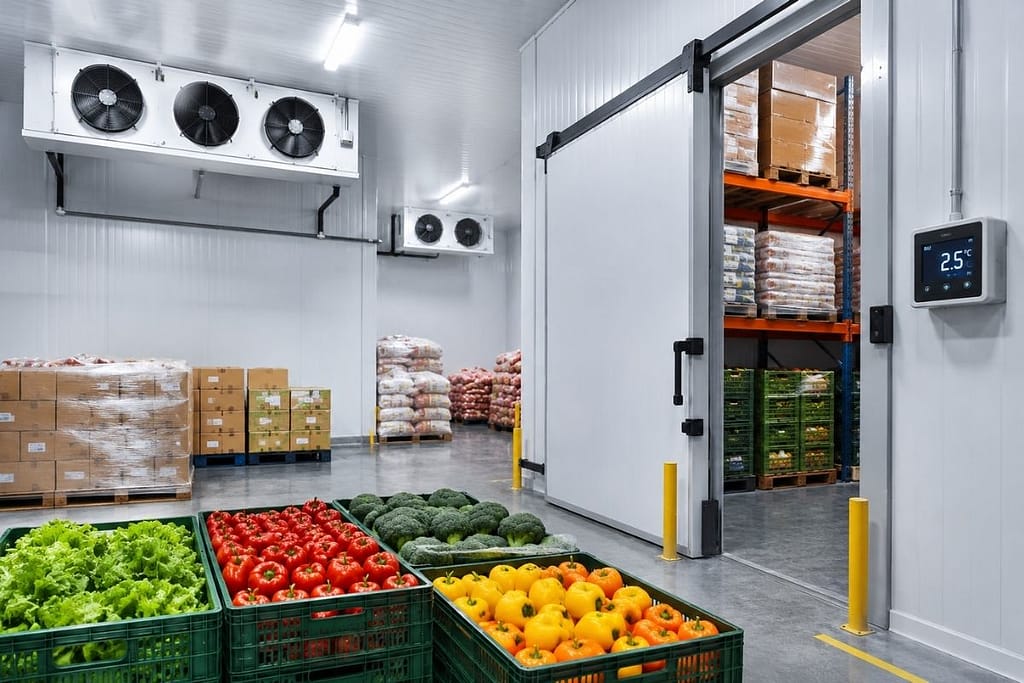
Food processing, pharmaceuticals, dairy, agriculture, logistics, hospitality — all of them run on temperature-controlled storage. Get the temperature wrong, and products lose quality, spoil, or, in some cases, turn unsafe to use. A reliable Cold Storage Cooling System is usually one of the bigger line items a refrigeration-dependent business will spend money on, and for good reason.
A well-designed cooling system holds temperatures steady, keeps humidity under control, and does it without running up the electricity bill. Products come through storage and transport still fresh. It doesn’t matter if it’s a small cold room for vegetables or a full industrial warehouse full of frozen meat — the refrigeration setup underneath is what decides whether the operation runs efficiently and whether the product holds up.
What Is a Cold Storage Cooling System?
A Cold Storage Cooling System is a refrigeration setup built to hold controlled temperatures inside cold rooms, freezer rooms, and refrigerated warehouses. It pulls heat out of the storage space and dumps it outside, so whatever’s inside stays at the temperature it’s supposed to.
The main components are:
- Compressor
- Condenser
- Evaporator
- Expansion valve
- Refrigerant
- Electronic controls
None of them does much alone. It’s the combination that keeps the space stable around the clock.
Why Temperature-Controlled Storage Is Essential
Products start breaking down the moment they leave their recommended temperature range, sometimes by just a couple of degrees. That’s enough to cut into shelf life, quality, and safety.
Cold storage systems help with:
- Preventing bacterial growth
- Extending shelf life
- Preserving nutritional value
- Maintaining product quality
- Cutting financial losses from spoilage
- Meeting food safety and pharmaceutical regulations
For a business managing large inventories, steady cooling is also what keeps customers coming back — one bad batch from a temperature slip can undo a lot of trust.
Industries That Depend on Cold Storage Cooling Systems
A lot of industries lean on cold storage refrigeration, including:
- Food processing plants
- Frozen food manufacturers
- Dairy production
- Seafood processing
- Pharmaceutical companies
- Hospitals and laboratories
- Floral storage
- Beverage manufacturers
- Agricultural produce warehouses
- Cold chain logistics
Take reliable refrigeration away from most of these, and the losses add up fast.
Key Components That Improve Cooling Performance
High-Efficiency Compressors
The compressor circulates refrigerant through the system, which is why people call it the heart of the setup. Newer units cool better on less power than older ones.
A lot of facilities go with a Commercial Condensing Unit, since it packages the compressor and condenser into one compact unit and holds up well for commercial refrigeration work.
Efficient Evaporators
Inside the cold room, the Low Temperature Evaporator pulls heat out and keeps cooling even across the space. These are built for freezer rooms and ultra-low temperature jobs, where “close enough” doesn’t cut it.
Good airflow off the evaporator gets rid of hot spots, so no corner of the room ends up warmer than the rest.
Reliable Condensers
Condensers take the heat pulled from inside the cold room and release it outside. Plenty of facilities install an Outdoor Condensing Unit — putting it outdoors improves heat rejection, frees up indoor floor space, and makes servicing it a lot less of a hassle.
Benefits of Modern Cold Storage Cooling Systems
- Consistent Temperature Control: Stable temperatures stop spoilage before it starts. Advanced controls adjust cooling output on their own as conditions inside the space shift.
- Better Product Quality: Fruit stays crisp, dairy stays safe, frozen food keeps its texture, and medicine holds its effectiveness — all because the temperature never wandered.
- Lower Energy Consumption: Energy-efficient compressors, EC fans, electronic expansion valves, smart controllers — newer systems use all of it to cut electricity costs without giving up cooling power.
- Reduced Maintenance Costs: Good equipment just breaks down less. Less downtime, fewer emergency repair calls.
- Longer Equipment Life: A system built well puts less strain on its own parts, so those parts last longer.
- Improved Food Safety Compliance: Reliable temperature monitoring makes it a lot easier to stay on the right side of HACCP, FSSAI, GMP, and similar standards.
Supporting Frozen Storage and Rapid Cooling
Some products need to go from warm to frozen almost immediately after production, or they lose freshness and texture. That’s the job of Blast Freezers.
Blast freezing drops product temperature fast enough to limit ice crystal formation, which is what protects food quality. It shows up in:
- Meat processing
- Seafood
- Ice cream manufacturing
- Ready-to-eat meals
- Bakery products
- Pharmaceutical products
It also stretches shelf life while keeping the product looking and tasting like it should.
Smart Features in Modern Cold Storage Systems
Refrigeration systems today come loaded with tech that makes day-to-day operation less of a headache:
- Digital temperature monitoring
- Remote system management
- Automatic defrost cycles
- Energy optimization controls
- Leak detection systems
- Real-time performance monitoring
- Alarm notifications
- Predictive maintenance analytics
Between all of it, downtime drops and cooling stays running without someone having to babysit it.
Choosing the Right Cold Storage Cooling System
Picking the right system isn’t a one-size-fits-all decision. It comes down to:
- Storage temperature requirements
- Product type
- Storage capacity
- Daily cooling load
- Energy efficiency goals
- Climate conditions
- Future expansion plans
- Maintenance accessibility
An experienced refrigeration manufacturer can help size the system correctly the first time, instead of leaving that as a problem for later.
The Future of Cold Storage Cooling
Demand for food preservation, pharmaceutical logistics, and sustainable refrigeration isn’t slowing down, and cold storage technology is moving to keep up.
A few trends worth watching:
- Environmentally friendly refrigerants
- AI-based monitoring systems
- IoT-enabled refrigeration controls
- Variable-speed compressors
- High-efficiency heat exchangers
- Renewable energy integration
Each one chips away at operating costs and environmental impact in its own way.
Conclusion
A dependable Cold Storage Cooling System does a lot of unglamorous but necessary work: keeping product quality intact, keeping businesses on the right side of food safety rules, and keeping temperature-controlled storage running the way it’s supposed to. Fresh produce, pharmaceuticals, frozen food production — all of it depends on cooling that doesn’t slip.
Get the system right, and it shows up as fewer breakdowns, lower energy bills, and less product thrown out. Cold chain demand isn’t going anywhere, and neither is the need to get the cooling right.