Air Cooled Condensing Unit: Working, Components, Applications, Benefits and Selection Guide
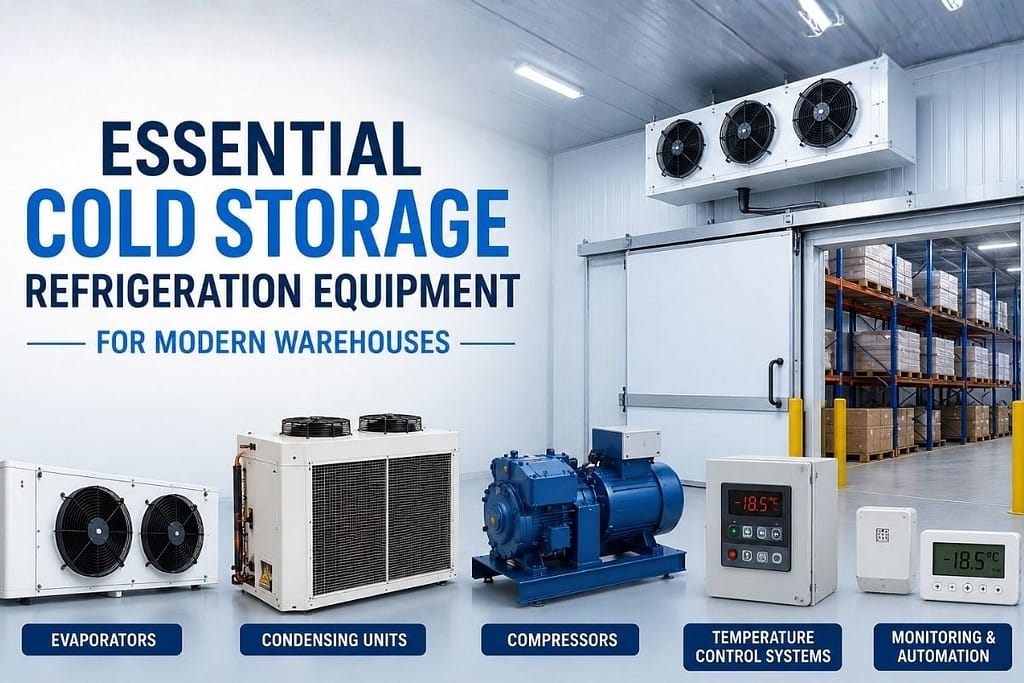
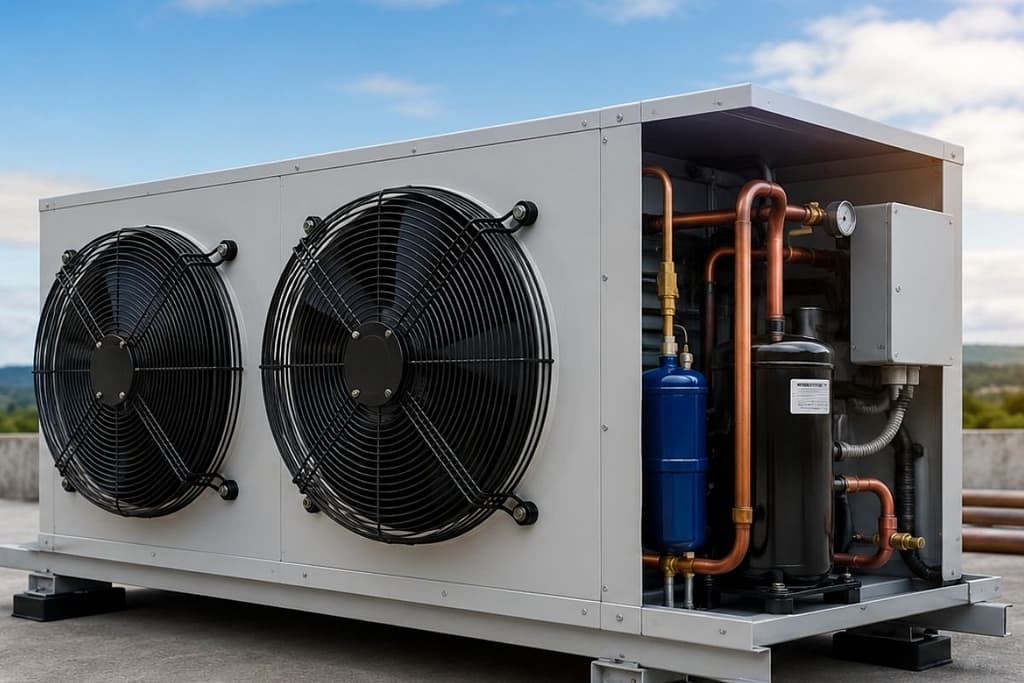
Quick Answer: An air-cooled condensing unit is a refrigeration assembly that uses ambient air to remove heat from refrigerant. It typically combines a compressor, air-cooled condenser, fan and controls. Introduction Refrigeration systems are an important part of India’s food processing, cold chain, dairy, pharmaceutical, hospitality and retail sectors. From cold rooms and frozen food stores to supermarkets and industrial refrigeration plants, reliable temperature control is essential for maintaining product quality and reducing spoilage. One of the most widely used solutions in these applications is the Air-Cooled Condensing Unit. It is designed to reject the heat absorbed by the refrigeration system into the surrounding air. Unlike a water-cooled system, it does not require cooling water or a cooling tower for condenser heat rejection. A typical condensing unit brings together major refrigeration components such as the compressor, condenser, condenser fan and associated safety and control devices. The evaporator remains at the cooling location, such as inside a cold room, while the condensing unit is generally installed outside or in a suitable machinery area. Danfoss describes the condensing unit as a combination that can include the compressor, condenser, receiver and associated electrical components. For Indian businesses, selecting the right unit is particularly important because refrigeration equipment may need to operate during periods of high ambient temperature. Condenser size, airflow, compressor capacity, refrigerant, operating temperature and installation conditions can all influence performance. What Is an Air Cooled Condensing Unit? An air cooled condensing unit is a packaged refrigeration assembly in which the compressor circulates and compresses refrigerant, while a finned condenser and fan reject heat to the surrounding air. The basic refrigeration cycle works as follows: In an air cooled condenser, heat transfer takes place between the refrigerant and moving ambient air. Forced airflow through the condenser coil is normally provided by one or more fans. Main Components of an Air Cooled Condensing Unit The exact configuration varies according to the manufacturer, capacity and application, but the major components generally include the following. 1. Compressor The compressor is the driving component of the refrigeration cycle. It draws low-pressure refrigerant vapour from the suction line and compresses it to a higher pressure and temperature. Depending on the application, condensing units may use scroll, reciprocating, semi-hermetic or other compressor technologies. Copeland, for example, offers scroll, semi-hermetic and hermetic condensing unit options for different refrigeration applications. 2. Air Cooled Condenser The condenser removes heat from the high-pressure refrigerant. It commonly consists of tubes and fins through which ambient air is moved by condenser fans. A properly sized condenser is particularly important in hot climates because the unit must reject heat even when outdoor temperatures are high. 3. Condenser Fan and Motor The condenser fan moves air across the condenser coil. Adequate airflow helps maintain appropriate condensing conditions and supports efficient refrigeration operation. Blocked coils, damaged fan blades or a faulty fan motor can restrict heat rejection and increase condensing pressure. 4. Liquid Receiver Depending on the design, a liquid receiver stores refrigerant in the liquid state and helps manage variations in refrigerant charge during operation. Not every condensing unit has exactly the same component configuration, so the manufacturer’s technical documentation should always be checked before installation or servicing. 5. Filter Drier A filter drier helps remove moisture and contaminants from the refrigeration circuit. Danfoss identifies filter driers as system-protection components that help remove moisture, acids and contaminants. 6. Pressure and Safety Controls Pressure switches, electronic controllers, overload protection and other safety devices may be incorporated to protect the compressor and refrigeration system. These controls can help respond to abnormal operating conditions such as excessive discharge pressure or low suction pressure. 7. Electrical and Control Components Depending on the model, the unit may include contactors, relays, control boards, terminal arrangements, fan controls and other electrical components. Modern systems can also incorporate electronic diagnostics and variable fan control to improve monitoring and operating efficiency. How Does an Air Cooled Condensing Unit Work? The working principle is based on the vapour-compression refrigeration cycle. Step 1: Heat Absorption The evaporator absorbs heat from the cold room, freezer, display cabinet or other refrigerated space. The refrigerant evaporates at a low pressure and temperature. Step 2: Compression The compressor receives the refrigerant vapour and compresses it. Compression increases the refrigerant’s pressure and temperature. Step 3: Heat Rejection The hot refrigerant enters the air cooled condenser. The condenser fan pushes ambient air across the condenser surface. Heat moves from the refrigerant to the surrounding air. As the refrigerant loses heat, it changes from vapour into liquid. Step 4: Liquid Refrigerant Flow The high-pressure liquid refrigerant moves towards the expansion device. The expansion device reduces its pressure before the refrigerant enters the evaporator. Step 5: Cooling Cycle The low-pressure refrigerant absorbs heat again inside the evaporator, and the cycle continues. This arrangement makes the condensing unit the key heat-rejection and compression section of many remote refrigeration systems. Applications of Air Cooled Condensing Units Air cooled condensing units are used across a wide range of refrigeration applications. Cold Rooms Cold rooms for fruits, vegetables, dairy products, meat, seafood and other temperature-sensitive products commonly use condensing units connected to a suitable evaporator. Food Processing Food processing facilities require controlled temperatures at different stages of production, storage and distribution. Properly selected refrigeration equipment can help maintain the required product conditions. Supermarkets and Retail Stores Display cases, walk-in coolers, freezers and other retail refrigeration systems can use air cooled condensing technology. Restaurants and Commercial Kitchens Commercial kitchens need refrigeration for ingredients, prepared food and frozen products. Compact condensing units can be suitable for many such installations. Dairy and Milk Chilling Milk collection and processing facilities require dependable refrigeration. Air cooled systems can be used in suitable milk chilling and cold storage applications. Pharmaceutical Storage Temperature-sensitive pharmaceutical products may require controlled storage conditions. The refrigeration system must be selected according to the required temperature range, load and applicable standards. Industrial Refrigeration Larger refrigeration installations may require an Industrial Condensing Unit designed around higher cooling loads, specific refrigerants and demanding