
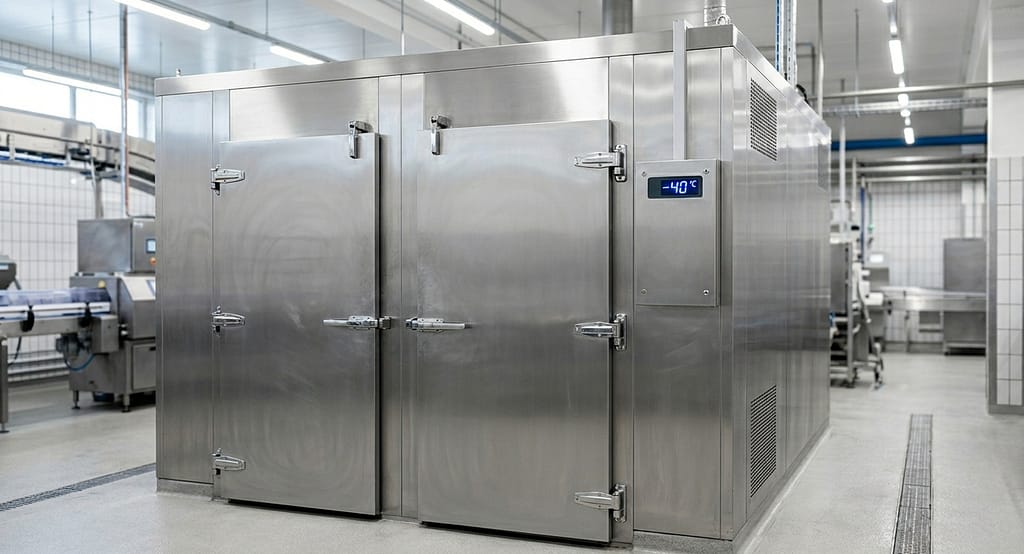
When we work with industries like food processing, dairy, seafood, meat, bakery, and Quick Service Restaurants (QSRs), one challenge comes up again and again—maintaining product quality while extending shelf life.
A blast freezer is one of the most powerful solutions to achieve this. But from our experience, buying a blast freezer is not just about selecting a machine—it’s about making a long-term investment that affects your product quality, operational efficiency, and energy costs.
We’ve seen many businesses choose equipment based only on price, and later struggle with performance issues, higher energy bills, and product losses. That’s exactly why we always guide our customers to evaluate the right factors before making a decision.
1. Cooling Capacity & Load Requirement
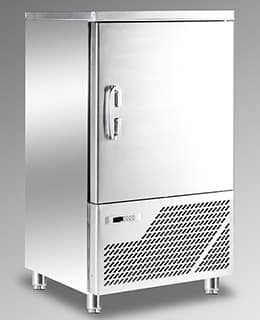
The first thing we always analyze is your actual cooling requirement.
If the blast freezer is undersized, it won’t achieve the desired temperature efficiently. If it’s oversized, you’ll end up paying unnecessary energy costs.
What we consider
- Quantity of product per batch
- Initial and final temperature
- Type of product
We strongly recommend proper load calculation before finalizing any system. This ensures optimal performance and long-term efficiency.
2. Type of Product to be Frozen
Every product behaves differently during freezing.
For example:
- Meat and seafood require rapid freezing
- Bakery items need controlled freezing
- Dairy products require uniform cooling
We always design solutions based on the specific product because using a generic system can compromise quality after thawing.
3. Freezing Time & Performance
The core purpose of a blast freezer is speed.
From our experience, faster freezing:
- Prevents large ice crystal formation
- Maintains texture and taste
- Extends shelf life significantly
We always focus on real performance, not just technical specifications on paper.
4. Airflow Design & Distribution
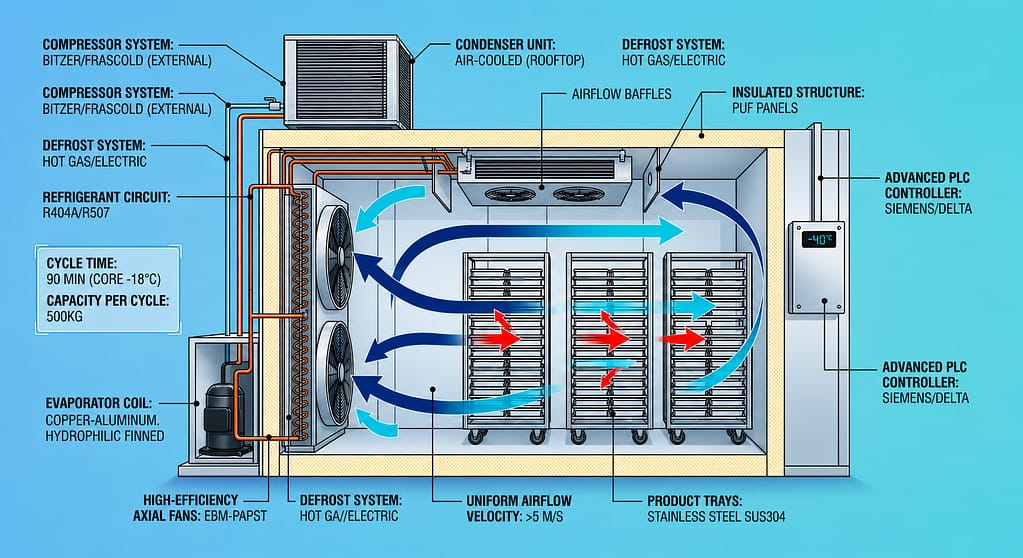
This is one of the most critical yet overlooked factors.
A well-designed airflow system ensures:
- Uniform cooling across all products
- No hotspots inside the chamber
- Consistent freezing results
At our end, we pay special attention to airflow engineering because it directly impacts product quality.
5. Energy Efficiency
Energy cost is a major concern for every business.
We always recommend looking at:
- High-efficiency compressors
- Proper insulation
- Optimized system design
A slightly higher initial investment in an energy-efficient system can save significant operational costs over time.
6. Build Quality & Insulation
A blast freezer operates continuously in demanding conditions. That’s why build quality matters.
We ensure:
- High-density insulation panels
- Durable structure
- Corrosion-resistant materials
Good insulation not only improves performance but also reduces energy consumption.
7. Temperature Control & Monitoring
Precise temperature control is essential for consistency and food safety.
We recommend systems that offer:
- Wide temperature range (-18°C to -40°C)
- Digital controllers
- Reliable monitoring
This helps maintain product quality across every batch.
8. Space & Layout Planning
We understand that space is often limited, especially in urban facilities.
That’s why we always evaluate:
- Available installation area
- Workflow efficiency
- Ease of loading and unloading
We also provide compact and customized designs to fit your operational needs.
9. Maintenance & Service Support
Even the best systems require proper maintenance.
We always design our systems to be:
- Easy to clean
- Easy to service
- Supported with reliable after-sales service
This ensures minimal downtime and long-term reliability.
10. Integration with Complete Refrigeration System
A blast freezer is just one part of the entire refrigeration setup.
It must work seamlessly with:
- Condensing Units (CDU)
- Indoor Units (IDU)
- Cold storage systems
We always focus on complete system integration to ensure smooth and efficient operation.
Why Manufacturing Quality Matters (Our Approach)
One important factor that we believe many buyers overlook is how the machine is actually manufactured.
At Pragya Refrigeration, we focus on complete control over quality and engineering.
Our Enzo branded IDUs & CDUs are developed with:
- Complete in-house engineering
- Dedicated research and development
- End-to-end manufacturing—from sheet metal cutting to final assembly and packaging
Why this matters for you
Because everything is built in-house, we ensure:
- Consistent product quality
- Better system performance
- Higher reliability
- Custom solutions based on your needs
What we ensure in every machine
- Strong engineering design
- High-quality components
- Proper testing before delivery
- Long-term durability
For us, it’s not just about delivering a machine—it’s about delivering a reliable solution.
Cost vs Long-Term Value
We always advise our customers not to focus only on the initial price.
Instead, we evaluate:
- Operating cost
- Energy consumption
- Maintenance requirements
- Equipment lifespan
In most cases, a low-cost machine ends up being more expensive in the long run.
Common Mistakes We See Buyers Make
Over the years, we’ve seen some common mistakes:
- Choosing equipment based only on price
- Ignoring airflow and design
- Not planning for future expansion
- Overlooking system integration
Avoiding these mistakes can save significant cost and operational challenges.
Conclusion
Buying a blast freezer is a critical decision that directly impacts your product quality, efficiency, and profitability.
From our experience, the right system is not just about specifications—it’s about proper design, engineering, and long-term reliability.
At Pragya Refrigeration, we focus on every detail—from load calculation to airflow design and from manufacturing to final testing. With our in-house engineering approach and Enzo IDU & CDU systems, we ensure that every machine we deliver meets high standards of performance and durability.
Why this matters for your business
- Consistent product quality
- Lower operational costs
- Reliable performance
- Scalable solutions for future growth