Understanding Cold Storage & Refrigeration Systems
Learn how cold rooms, blast freezers, evaporators, condensing units, and refrigeration systems work to preserve products safely and efficiently.
What is Refrigeration?
Refrigeration is the process of removing heat from a space to maintain low temperatures. It is used to preserve food, dairy products, medicines, seafood, frozen products, and industrial materials.
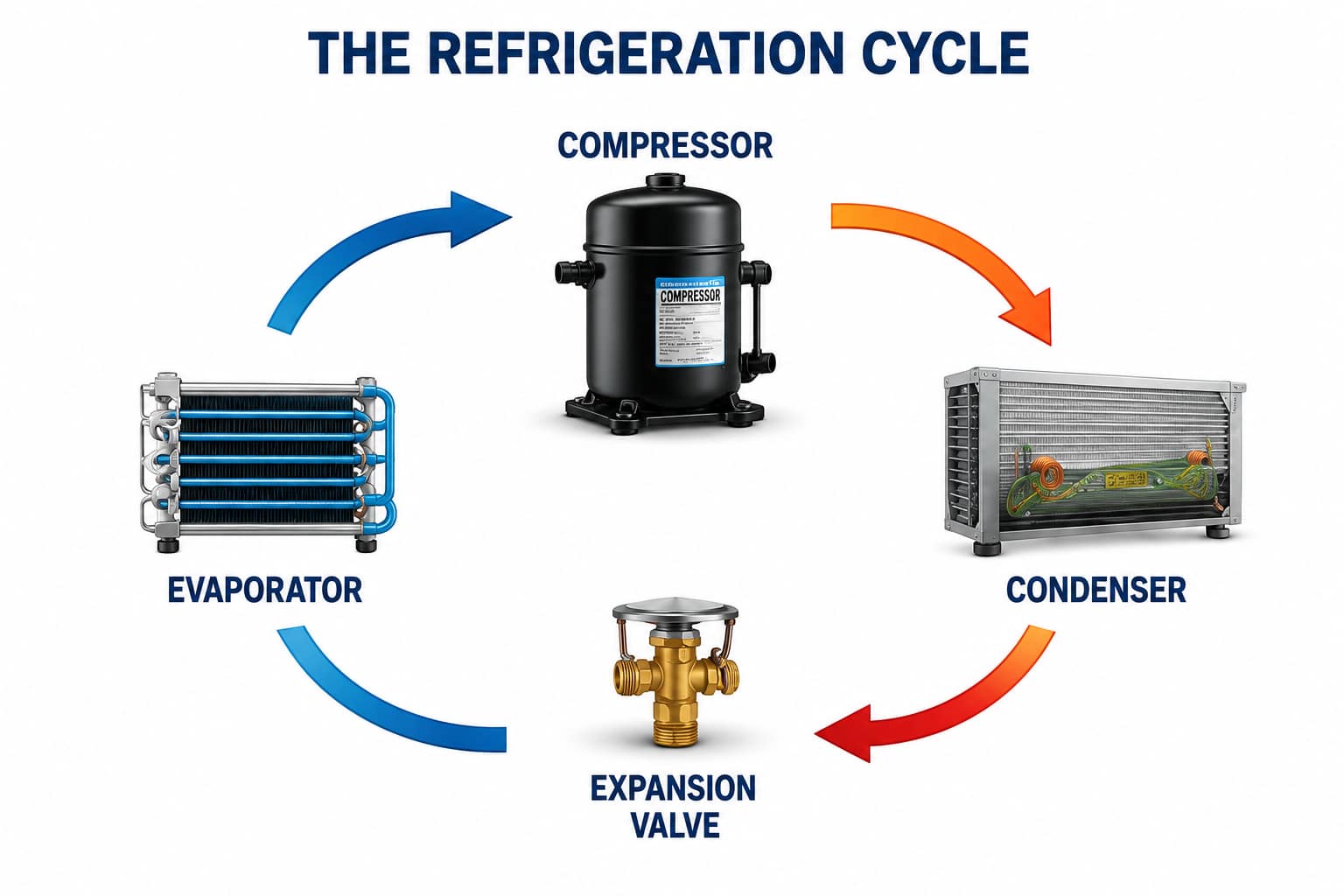
A refrigeration system continuously absorbs heat from inside a room and releases it outside using specialized equipment like compressors, evaporators, condensers, and refrigerants.At Pragya Refrigeration, we manufacture energy-efficient refrigeration solutions designed for cold chain and industrial cooling applications.
What is a Cold Room?
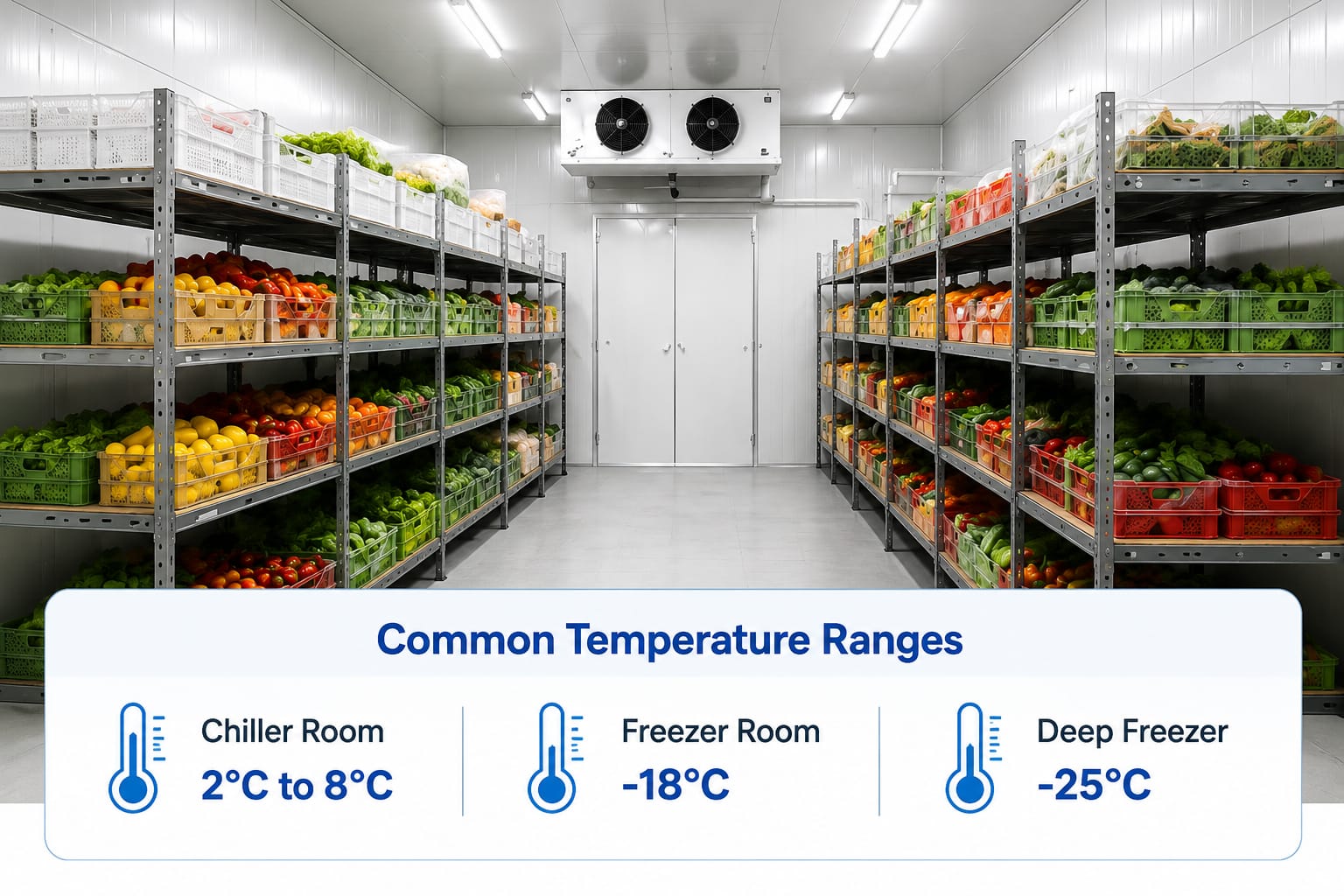
A cold room is an insulated temperature-controlled storage space used for storing perishable products at specific temperatures.
Increase
Shelf Life
Maintain
Freshness
Reduce
Spoilage
Control
Humidity
Widely used in:
Dairy
Industry
Fruits &
Vegetables
Ice Cream
Storage
Hotels &
Restaurants
Pharmaceutical
Storage
Food Processing
Units
3. How Does a Cold Room Work?

Step 1
Insulated Panels
Special insulated panels prevent outside heat from entering.
Step 2
Evaporator / IDU
The indoor unit circulates cool air inside the room.

Step 3
Condensing Unit / CDU
The condensing unit removes heat from refrigerant and releases it outside.

Step 4
Temperature Control
Controllers automatically maintain the required temperature.
Understanding CDU & IDU
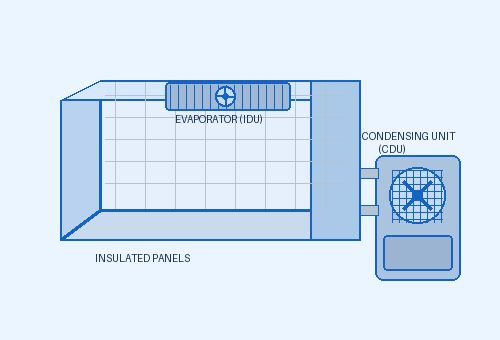
A cold room system works through two important units — the CDU (Condensing Unit) and the IDU (Indoor Unit / Evaporator). Both units work together to maintain the desired temperature inside the cold room. The CDU is placed outside and helps release heat from the system, while the IDU is installed inside to circulate cool air and maintain consistent cooling performance. Together, they ensure efficient refrigeration, temperature stability, and reliable storage conditions for products.

CDU
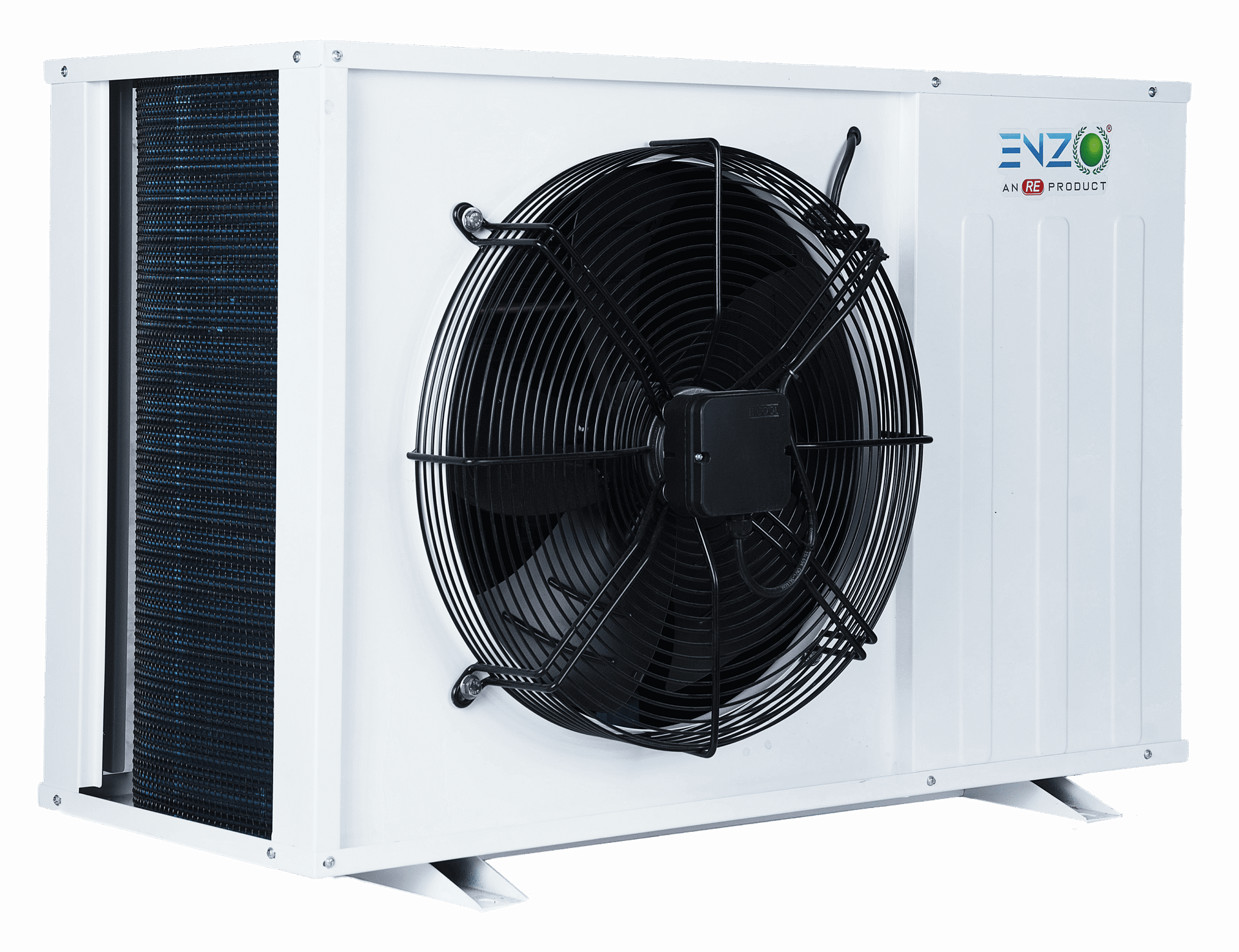
The CDU is the outdoor part of the refrigeration system responsible for removing heat and compressing refrigerant for continuous cooling operation. It plays a major role in maintaining system efficiency and smooth performance.

IDU
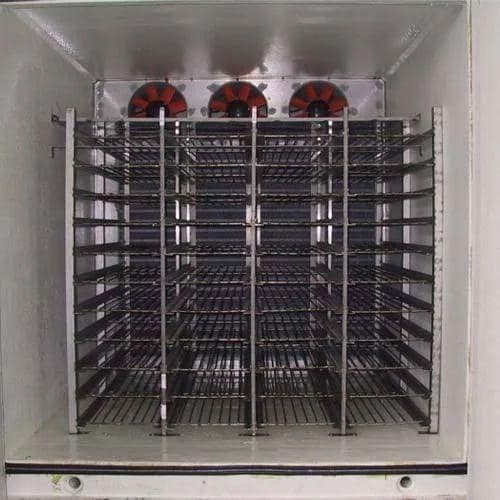
The IDU is installed inside the cold room and is responsible for absorbing heat from the storage area while distributing cool air evenly. It helps maintain proper temperature and freshness inside the room.
What is a Blast Freezer?
A blast freezer rapidly freezes products at very low temperatures to preserve freshness, texture, and nutritional value.
Unlike normal freezers, blast freezers freeze products quickly, reducing ice crystal formation and maintaining better product quality.
Blast freezers are commonly used in:
- Seafood Industry
- Meat Processing
- Dairy Products
Industries We Serve
Why Temperature Control is Important
Improper temperature can damage products, reduce shelf life, and increase spoilage.
- Maintain product freshness and extend shelf life for long-term storage.
- Reduce bacterial growth and protect items from temperature damage.
- Improve food safety by maintaining stable and hygienic cooling conditions.
- Prevent unnecessary wastage caused by spoilage and heat exposure.
- Save operational costs through energy-efficient and controlled refrigeration systems.
| Product | Recommended Temperature |
|---|---|
| Milk | 2°C to 4°C |
| Vegetables | 4°C to 8°C |
| Frozen Chicken | -18°C |
| Ice Cream | -20°C |
| Seafood | -18°C to -25°C |
FAQ
Frequently Asked Questions
We provide reliable cold room and refrigeration solutions designed to maintain product freshness, improve storage efficiency, and ensure long-term temperature control. Our systems are suitable for food storage, pharmaceuticals, dairy, restaurants, warehouses, and commercial applications. Below are some commonly asked questions to help you understand our cold room solutions better.
A blast freezer freezes products much faster than a normal freezer.
CDU stands for Condensing Unit, responsible for removing heat from the system.
IDU is the indoor evaporator unit that circulates cold air.
Insulation prevents outside heat from entering and improves energy efficiency.
Food processing, dairy, hospitality, agriculture, and pharmaceutical industries.